AU Executive Council Opens 48th Ordinary Session, Calls for Unity, Water Security, Accelerated Integration
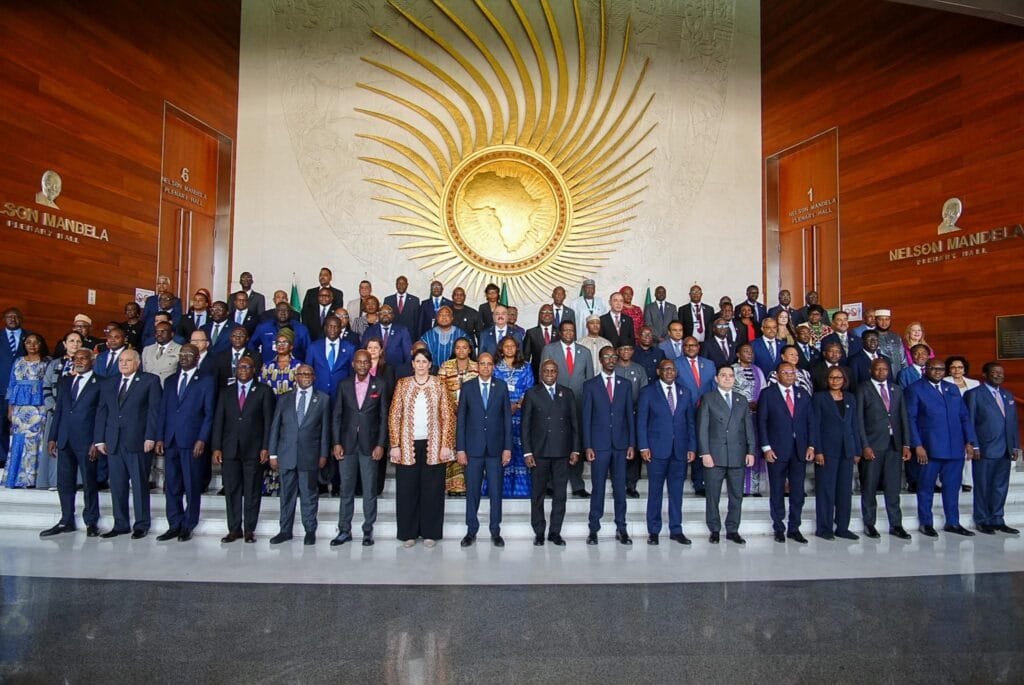
The Forty-Eighth (48th) Ordinary Session of the African Union (AU) Executive Council commenced on Wednesday at the AU headquarters in Addis Ababa, Ethiopia, with a strong appeal for unity, sustainable development, and collective action to address Africa’s pressing challenges.
The two-day meeting, attended by foreign ministers from AU member states, is being held under the AU’s 2026 Theme of the Year: “Assuring Sustainable Water Availability and Safe Sanitation Systems to Achieve the Goals of Agenda 2063.” The session is expected to shape policy directions ahead of the 39th Ordinary Session of the Assembly of Heads of State and Government scheduled for February 14–15.
Addressing the council, Chairperson of the AU Commission, H.E. Mahmoud Ali Youssouf, underscored the importance of water and sanitation to Africa’s future, describing water as a shared resource that must be protected and used to promote peace and cooperation among member states. He said, “In the face of observed climate disruptions, the prudent use of water in all aspects of daily life is a major imperative. This vital resource must be perceived as a collective good to be preserved at all costs and as a vector for bringing our States closer together and for peace.”
Youssouf also highlighted ongoing institutional reforms within the Commission, including the implementation of the validated 2024–2028 strategic plan in coordination with reform champion, President William Ruto. He expressed concern over political instability, security crises, and unconstitutional changes of government across parts of the continent, noting both progress and setbacks. “While there has been regression and progress is minimal, our mediators are active. On unconstitutional changes of government, I welcome the return to constitutional order of the Gabonese Republic and the Republic of Guinea and their return to the AU,” he stated.
On economic development, the AU Commission Chair emphasized the role of the African Continental Free Trade Area (AfCFTA) and the need for innovative financing strategies to sustain continental integration. According to him, “More than ever, the continent needs to capitalize on its instruments to boost the momentum of development and integration, reflecting on innovative sources of financing and involving all actors, however marginal they may seem.”
Chairperson of the Executive Council and Angola’s Minister of External Relations, H.E. Amb. Téte António, noted that Angola’s presidency of the AU had intensified diplomatic engagement and strengthened coordination on peace, security, and development priorities. He said, “Under Luanda’s leadership, the AU advanced coordination on peace, security and development priorities, while laying important groundwork for the 2026 AU Summit of Heads of State and Government.” He added that the presidency was marked by a commitment to African-led solutions, unity among member states, and strengthened continental partnerships.
Ethiopia’s Minister of Foreign Affairs, H.E. Gedion Timothewos, highlighted the continent’s achievements over the past year, including progress on Agenda 2063, AfCFTA implementation, and Africa’s collective stance on issues such as UN Security Council reform and climate justice. However, he cautioned that unconstitutional government changes, geopolitical competition, and external exploitation remain challenges, urging stronger unity and leadership to defend Africa’s interests as Ethiopia prepares to host COP 32.
Also speaking, Executive Secretary of the United Nations Economic Commission for Africa (UNECA), Mr. Claver Gatete, stressed that Africa must shift away from outdated development models dependent on commodity exports and external financing. He pointed to the AfCFTA as a central platform for building a resilient continental economic system amid global economic fragmentation and climate pressures.
During its closed sessions, the Executive Council will review the report of the 51st Ordinary Session of the Permanent Representatives’ Committee, examine AU participation in the G20, and conduct elections and appointments to key organs, including the Peace and Security Council, the African Commission on Human and Peoples’ Rights, and the African Committee of Experts on the Rights and Welfare of the Child.
Ministers will also consider updates on the implementation of AU decisions, including the Skills Assessment and Competence Audit process, draft legal instruments, and reports from ministerial committees on financial contributions, African candidatures in international systems, and the execution of Agenda 2063.
The 48th Ordinary Session reinforces the African Union’s continued commitment to strengthening governance, advancing peace and security, and accelerating continental integration and development through coordinated action among member states.
About The Author