Heated Global Reactions as Kuwait Rejects Somaliland Recognition
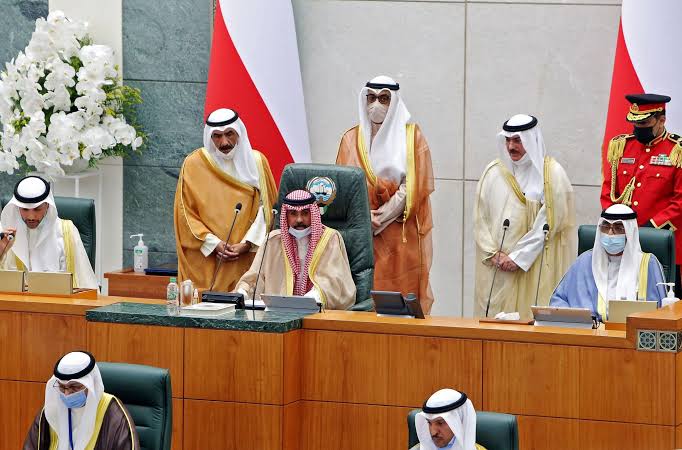
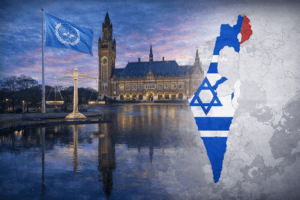
Kuwait’s firm rejection of Israel’s recognition of Somaliland as an independent state has sparked a wave of intense reactions across social and diplomatic spaces, reflecting deep divisions over sovereignty, international law, religion, and Africa’s post-colonial borders.
In a statement issued on Saturday, Kuwait’s Ministry of Foreign Affairs condemned Israel’s unilateral move, describing it as a violation of international law and a direct affront to Somalia’s sovereignty. The Gulf nation reiterated its “full support for Somalia’s unity and territorial integrity,” stressing that any action undermining Somalia’s state institutions is unacceptable.

Kuwait’s position aligns with the long-standing stance of the African Union and many Arab and Muslim-majority countries, which continue to regard Somaliland as an integral part of the Federal Republic of Somalia despite its self-declared independence in 1991.

The statement, however, quickly ignited debate online, with commentators offering sharply contrasting perspectives. Some voices strongly backed Kuwait, viewing the issue through the lens of global power politics and historical manipulation.
Daliso Z. Zulu argued that the controversy reflects a broader geopolitical agenda, saying, “These divisions of countries are largely influenced by so-called developed countries… it is sad that many Africans are still sleeping about this division agenda by world powers.”
He criticised those questioning Kuwait’s relevance, describing such reactions as uninformed.
Others framed the debate around peace and humanitarian concerns rather than territorial disputes.
Muhammad Anamul Hoque urged restraint, saying, “At the end of the day, human life is more important than religion. May peace be established between Israel and Islamic countries.” His comment echoed calls for de-escalation amid rising tensions in the region.
Supporters of Somalia’s unity were more direct. A reader identified as Hajji Shaakir stated plainly, “Somaliland is part of Somalia,” reinforcing Kuwait’s official position and the dominant international view.
Not all reactions were sympathetic to Kuwait. Some critics accused the Gulf state of inconsistency in its foreign policy. Jos Flachs remarked sarcastically, “Eh, Kuwait… you realize you yourself are occupying sacred Iraqi territory?” highlighting perceived double standards in regional politics.
On the other side of the divide, pro-Somaliland voices expressed frustration at Arab and Muslim countries opposing recognition. Barkad Barkad questioned the moral basis of Kuwait’s stance, arguing that Somaliland, as a Muslim-majority territory, has been denied its “right and freedom” despite decades of seeking international recognition.
Historical arguments also featured prominently in the reactions. Haykal Maxamed insisted that Somaliland’s case is legally distinct, stating that the 1960 union with Somalia was never ratified and that Somaliland “restored its independence” in 1991, citing findings attributed to an African Union fact-finding mission.
Some reactions blended geopolitics with sharp rhetoric, accusing Israel of strategic interests in the Red Sea region and warning against further destabilisation. Others, like Mukhtar Caraale, went further by portraying Somaliland as a democratic alternative in the region, claiming Kuwait and other Arab states fear the example of popular elections and political freedoms.
As the reactions continue to pour in, Kuwait’s rejection of Somaliland’s recognition has underscored how a single diplomatic decision can reopen long-standing wounds over colonial borders, self-determination, and global power influence—issues that remain unresolved more than three decades after Somaliland declared independence.
About The Author