Israel Recognises Somaliland

File Source: Google
Israel has become the first country in the world to formally recognise Somaliland, marking a major diplomatic breakthrough for the self-declared republic and triggering sharp reactions across Africa and the Middle East.

Israeli Prime Minister Benjamin Netanyahu announced on Friday that Israel and Somaliland had signed a joint declaration establishing full diplomatic relations, describing the move as being “in the spirit of the Abraham Accords” — the US-brokered agreements that normalised Israel’s relations with several Arab states.

Somaliland declared independence from Somalia in 1991 following the collapse of the Siad Barre regime, but has since failed to secure recognition from any United Nations member state.
The territory controls the northwestern part of present-day Somalia, formerly the British Protectorate of Somaliland.
Somalia swiftly rejected the development. A Somali government source confirmed that the federal cabinet was scheduled to hold an emergency meeting to determine the country’s official response.
Somalia’s Foreign Minister, Abdisalam Abdi Ali, also joined his counterparts from Egypt, Turkiye and Djibouti in a joint call, where they reaffirmed support for Somalia’s unity and territorial integrity.
In a statement, Egypt’s Foreign Ministry warned that recognising a breakaway region within a sovereign state sets a “dangerous precedent” and violates the United Nations Charter. “Respect for the unity, sovereignty and territorial integrity of states is a fundamental pillar of international stability and must not be undermined under any pretext,” the ministry said.
The Gulf Cooperation Council (GCC) also condemned Israel’s decision. GCC Secretary-General Jasem Mohamed AlBudaiwi described the recognition as a “serious violation of international law” and a “clear breach of the sovereignty and territorial integrity of the Federal Republic of Somalia.”
Despite the backlash, Netanyahu hailed the agreement as historic and congratulated Somaliland President Abdirahman Mohamed Abdullahi, popularly known as Abdirahman Cirro, during a video call.
He praised Cirro’s “leadership and commitment to promoting stability and peace” and invited him to visit Israel.
Israeli Foreign Minister Gideon Saar said the agreement was the outcome of more than a year of sustained dialogue between both sides and would lead to the exchange of ambassadors and the opening of embassies in Tel Aviv and Hargeisa. He added that Israel would immediately begin institutionalising cooperation across economic, political and security sectors.
President Cirro welcomed Israel’s recognition as a “historic moment” and declared Somaliland’s readiness to join the Abraham Accords. He said the move marked “the beginning of a strategic partnership that advances mutual interests, strengthens regional peace and security, and delivers shared benefits.”
The recognition represents a dramatic shift for Somaliland, which has maintained relative peace and built functioning institutions — including its own currency, parliament and security forces — despite remaining diplomatically isolated for more than three decades. However, parts of its eastern regions remain contested by communities opposed to secession from Somalia.
In recent years, Somaliland has strengthened informal ties with the United Arab Emirates and Taiwan in its push for international legitimacy. The region has also gained vocal supporters within the United States Republican Party, including Senator Ted Cruz, who has repeatedly urged Washington to recognise Somaliland.
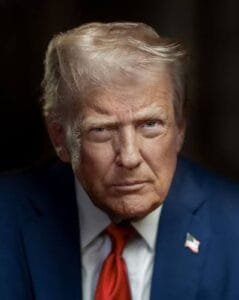
Although former US President Donald Trump hinted in August that his administration was considering the issue, the United States has not officially altered its long-standing policy of recognising Somalia’s territorial unity.
The announcement comes amid waning US interest in Somalia and renewed controversy following reports earlier this year that potential recognition of Somaliland was being linked to proposals to relocate Palestinians from Gaza to parts of Africa — plans strongly rejected by Egypt, Turkiye, Somalia and Djibouti.
Security analysts say Israel’s move could have far-reaching implications. Jethro Norman of the Danish Institute for International Studies noted that while it remains unclear whether other countries will follow Israel’s lead, the decision could embolden separatist movements within Somalia’s fragile federal system.
Somalia currently operates a decentralised federal structure, but tensions persist, with key states such as Puntland and Jubaland withdrawing from federal arrangements over constitutional and electoral disputes. Reacting to the development, Puntland’s interior minister, Juha Farah, suggested the recognition could reshape regional calculations, describing it as evidence that international recognition is becoming increasingly “transactional rather than principled.”
As diplomatic reactions continue to unfold, Israel’s recognition of Somaliland has opened a new and controversial chapter in the geopolitics of the Horn of Africa.
About The Author