Security for Israel, Stability for the Ummah: A Hard Truth We Must Confront
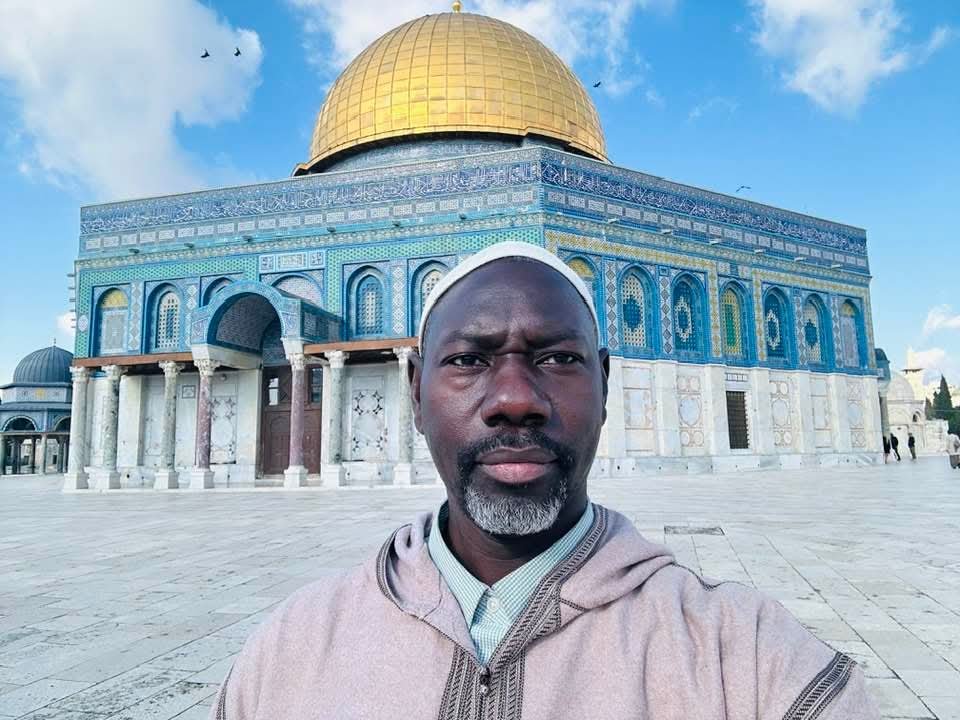
For far too long, segments of the Muslim world have allowed themselves to be driven by emotion rather than intellect, by grievance rather than strategy, and by hatred rather than higher moral reasoning. As an imam, an interfaith leader, and a Muslim who has dedicated years to combating both antisemitism and Islamophobia, I say this not to provoke, but to awaken.
We cannot continue to outsource our thinking to the loudest voices in the room — voices often fueled by rage, ideology, or geopolitical manipulation. An ummah that abandons critical reasoning becomes vulnerable, dependent, and fragmented.
When intellectual leadership collapses, emotional populism fills the vacuum. The result is a divided Muslim world, reactive rather than strategic, and perpetually at the mercy of external decision-makers.
I speak as someone who believes that Allah grants human beings intellect as a trust. Independent thinking is not rebellion against faith; it is fulfillment of it. Islam’s golden age was built on scholarship, rational discourse, and engagement with the world — not isolation or hostility toward it.
Here is a difficult but necessary truth: If Israel is not free, safe, and secure from hatred emanating from the Muslim world, no Muslim nation will ultimately be safe either. This is not a theological concession; it is a geopolitical reality.
Why? Because perpetual hostility toward Israel has become the emotional engine that sustains extremism, destabilizes regional politics, and invites foreign intervention. Hatred has not liberated Palestine, nor strengthened Muslim economies, nor unified our political institutions. Instead, it has been weaponized by extremist groups to justify violence, and by global powers to justify endless security interventions in Muslim-majority regions.
Security is reciprocal. Stability is reciprocal. When one state in the region is perpetually framed as illegitimate, the entire region becomes structurally unstable. Instability attracts militarization. Militarization attracts proxy wars. Proxy wars breed extremism. And extremism ultimately consumes Muslim societies first and most painfully.
As the founder of Muslims–Israel Dialogue in New York, I have seen firsthand that principled engagement does not equal surrender. Supporting the right of the Jewish people to a secure state does not negate advocacy for Palestinian dignity, justice, and self-determination. In fact, lasting justice for Palestinians is impossible in a climate where Israel’s existence is perpetually contested.
The Muslim world must decide: do we want permanent grievance, or permanent strategy? Do we want slogans, or solutions? Do we want to be defined by opposition, or by vision?
Antisemitism weakens Muslims. Islamophobia weakens Jews. Both are toxins feeding off each other in a cycle of mutual fear. The only sustainable path forward is moral courage: confronting hatred within our own communities while demanding justice and dignity for all peoples.
This is not about abandoning Palestine. It is about abandoning the illusion that hatred is a strategy. It is about recognizing that security for Israel and stability for Muslim nations are intertwined realities in an interconnected Middle East.
The Muslim world does not need louder anger. It needs wiser leadership.
Alhamdulillah for the freedom to think, to speak, and to challenge our own assumptions. If we truly seek victory — Hizbul Fawz, the party of ultimate success — then we must choose intellect over impulse, coexistence over extremism, and strategic realism over emotional paralysis.
History will not remember how loudly we shouted. It will remember whether we were courageous enough to think.
Peace…
About The Author