Trump’s Approval or Iran’s Sovereignty? The Power Struggle Behind Tehran’s New Supreme Leader
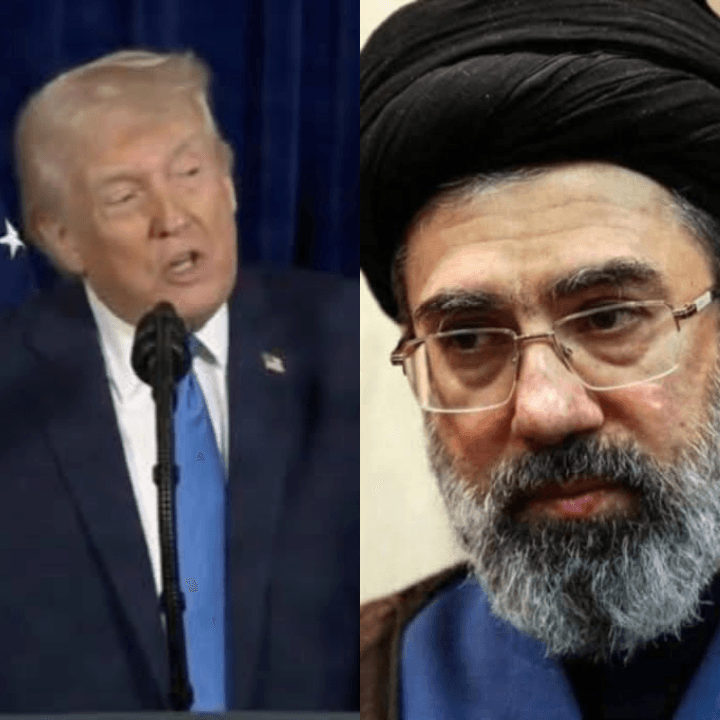
The unfolding leadership transition in Iran following the death of Ali Khamenei has ignited not just a domestic debate within the Islamic Republic, but a broader geopolitical confrontation involving Donald Trump and the United States. Trump’s insistence that Iran’s next supreme leader would require American “approval” to survive politically represents more than a provocative statement—it underscores the deepening power struggle between Washington and Tehran over influence in the Middle East.
Trump made the controversial remark during an interview with ABC News, arguing that whoever emerged as Iran’s new supreme leader would not “last long” without U.S. acceptance. According to him, Washington must ensure that the Islamic Republic does not eventually develop nuclear weapons or revert to policies that threaten American interests and those of its allies. His comment reflects a broader strategy that frames U.S. involvement as necessary for long-term regional stability.
Yet such a claim inevitably collides with the principle of national sovereignty. For a country like Iran—whose political identity has been built on resistance to Western influence since the Iranian Revolution—the suggestion that Washington should approve its supreme leader is bound to provoke fierce opposition. Iranian officials quickly dismissed Trump’s ambition, describing it as unrealistic and even laughable.
The appointment of Mojtaba Khamenei as Iran’s new Supreme Leader further illustrates this resistance. Chosen by the powerful Assembly of Experts nine days after his father’s death, Mojtaba became the third supreme leader in the country’s modern history. The clerical body said the decision was reached by a “decisive vote,” signalling that the Islamic Republic intends to maintain continuity in its leadership despite external pressure.
Trump had earlier dismissed Mojtaba as a “lightweight,” suggesting the United States should influence who ultimately leads Iran. But Tehran responded by insisting the leadership decision is purely an internal matter. Iranian Foreign Minister Abbas Araghchi reiterated that no foreign government would determine the country’s political leadership, calling on Washington instead to take responsibility for escalating the conflict.
The debate surrounding Trump’s remarks highlights a familiar dilemma in international relations: the tension between global power politics and national self-determination. While the United States sees itself as safeguarding global security, particularly regarding nuclear proliferation, countries like Iran interpret such interventions as attempts to undermine their independence.
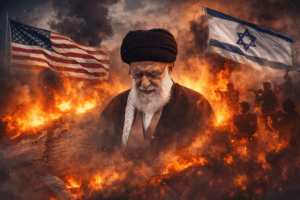
Complicating matters further is the ongoing military confrontation between Iran and Israel, which has intensified following the strikes that killed the elder Khamenei. Reports of attacks on oil facilities around Tehran and Iran’s warning that it could sustain a missile and drone campaign for months suggest that the conflict may not end soon.
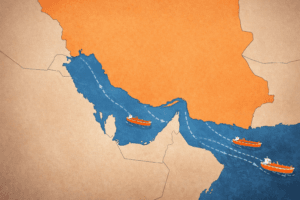
As casualties mount—more than a thousand civilians reportedly killed—the geopolitical stakes continue to rise. Gulf states such as Saudi Arabia, Kuwait and Bahrain have also been affected by the expanding hostilities, raising fears that the conflict could spiral into a wider regional war.
In the end, Trump’s declaration that Iran’s leader needs U.S. approval may resonate with supporters who favor a hardline approach to Tehran. However, the swift appointment of Mojtaba Khamenei and Iran’s firm rejection of American involvement suggest that Washington’s influence over Iran’s internal leadership decisions remains extremely limited.
Ultimately, the controversy reveals a deeper truth: while global powers may attempt to shape political outcomes abroad, the legitimacy of leadership in sovereign states is rarely determined by external approval. For Iran, choosing its supreme leader is not just a political process—it is a symbolic assertion of independence in the face of foreign pressure.
About The Author