NYC opens public review for new Racial Equity Plan
New York City has released a preliminary racial equity plan involving 45 agencies and opened a 30-day public comment period as officials debate how to turn the framework into measurable action.
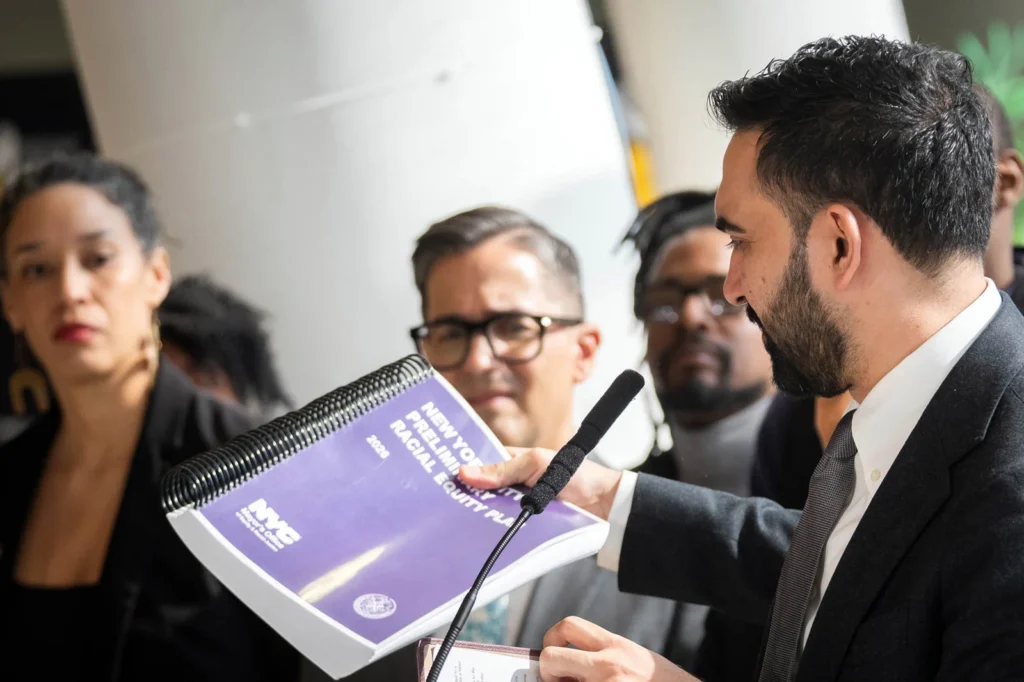
New York City has released a preliminary citywide racial equity plan and opened a 30-day public comment period, launching what officials describe as the first formal phase of a broader effort to address long-standing disparities in how city systems serve residents across race, geography, and income.
The plan was presented Monday at Medgar Evers College in Central Brooklyn, where city officials said the framework brings together the work of 45 city agencies under a single policy structure. According to the administration, the document is intended to guide future action on issues including housing, health, economic opportunity, and access to city services.
Mayor Zohran Kwame Mamdani said the release fulfills a commitment his administration made to publish the long-delayed documents within its first 100 days. Referring to the earlier delay, he said the reports had been postponed by 580 days under the previous administration. He described the new plan as “the first step in developing a whole-of-government approach” to addressing racial inequities in New York City.
Chief Equity Officer and Commissioner Afua Atta-Mensah called the plan “not just a document — it is a commitment,” adding that its real value will depend on what happens after publication. “Plans alone do not create change — action does,” she said, urging agencies, partners, and residents to stay engaged and help shape the final version.
The city says more than 200 public servants contributed to the framework, which is expected to serve as a roadmap for both targeted programs and longer-term structural reforms. Officials stressed that the process is still open, and that public feedback over the next month will help determine what is included in the final plan.
Public Advocate Jumaane Williams, who also spoke at the event, welcomed the framework but cautioned that publication alone is not enough. “We also know that plans don’t just change lives; actions do,” he said. Williams argued that agency budgets and implementation strategies must eventually reflect the report’s findings if the plan is to have practical meaning for residents.
Council Member Sandy Nurse, chair of the Civil and Human Rights Committee, described the plan as overdue and said the City Council would likely have a role in advancing the conversation. She pointed in particular to the importance of measurable goals, deadlines, and agency accountability, saying those elements would be critical if the plan is to move beyond aspiration.
The release of the document reflects a broader debate over how city government should respond to inequities that many advocates say have been embedded in public policy for generations. Supporters of the framework view it as a long-needed institutional response. Skeptics, however, are likely to judge it less by its language than by whether it results in visible changes in public spending, service delivery, and measurable outcomes.
For now, the plan enters a public review phase. What follows over the next several months will determine whether the document becomes a meaningful policy instrument or simply another city report filed into a growing archive of unmet promises.
About The Author