The Killing of Ayatollah Khamenei — A Turning Point in the Middle East or the Beginning of a Broader Global Conflict?
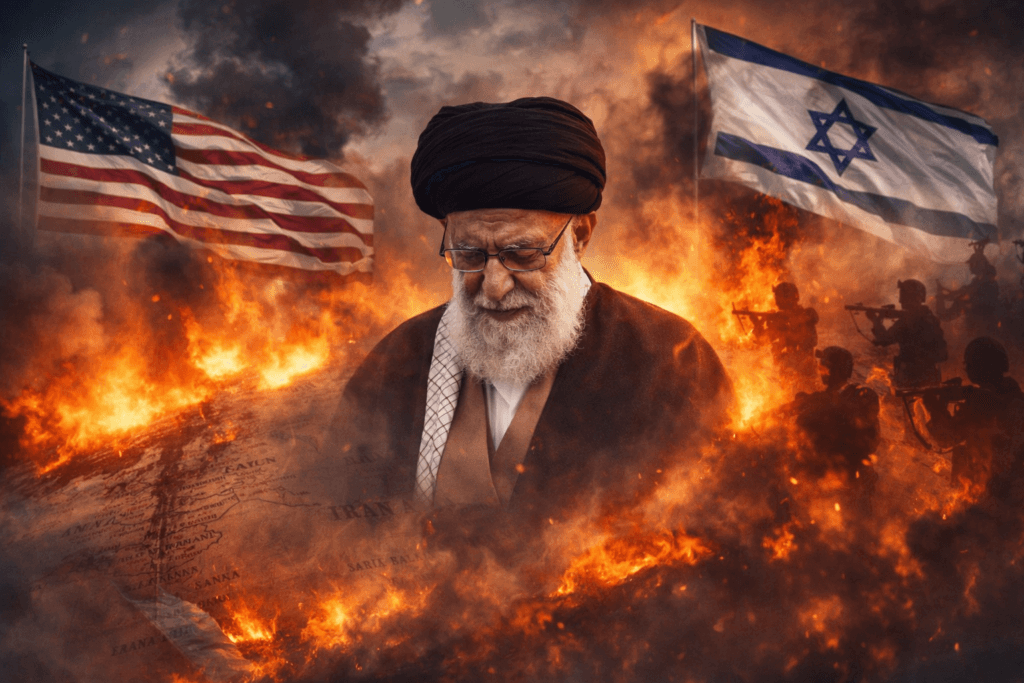
The reported death of Ayatollah Ali Khamenei, Iran’s Supreme Leader since 1989, in a joint U.S.–Israeli military strike has sent shockwaves through the Middle East and the broader geopolitical order. Iranian state media confirmed his death and declared a 40-day mourning period, signaling the gravity of the moment for the Islamic Republic and the region at large.
In assessing the consequences of this seismic event, it is essential to recognize the multi-layered implications, strategic, political, religious, and socio-security, that extend far beyond Tehran’s walls.
A Leadership Vacuum and Power Struggle in Iran
Khamenei’s death creates an immediate leadership crisis within Iran’s unique theocratic hierarchy. The country’s constitution provides for a Provisional Leadership Council to assume interim control, but with no clear successor, factions within the Revolutionary Guard Corps (IRGC), clerical elites, and reformist elements now compete for influence.
This vacuum risks not only internal instability but also a fracturing of Iran’s external posture, particularly its proxy networks in Iraq, Lebanon, Syria, and Yemen. Tehran’s ability to project power, long anchored personally in Khamenei’s ideological vision, will be tested amid spiraling uncertainty.
Will This Become World War III? Historical Context and Regional Dynamics
The immediate reaction in parts of the Arab and Muslim world, including calls for “jihad” against the U.S. and Israel mostly by Shiite Muslims around the globe, suggests that the killing could catalyze wider regional conflict, but it is too early to defiantly declare this the beginning of a global Third World War.
Khamenei was a symbol of resistance for groups such as Hezbollah and other Iran-aligned militias. His removal will undoubtedly ratchet up short-term hostilities and may provoke asymmetric retaliation, including missile attacks or insurgent escalations across hotspots in the Levant and Gulf.
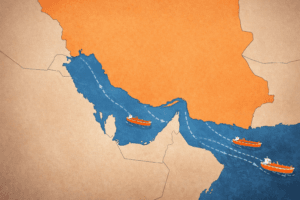
Yet the mechanics of full-scale global war are not yet in motion. No major world powers, outside the U.S. and Israel, have opened hostilities, and diplomatic actors in Europe and the United Nations have urged restraint. That said, Iran’s potential responses could destabilize global energy markets, threaten shipping in the Strait of Hormuz, and heighten sectarian tensions across the Middle East.
Strategic Control: U.S., Israel and the Balance of Power
For Washington and Jerusalem, eliminating Khamenei marks what appears to be a strategic effort to decapitate Iran’s theocratic leadership and weaken the Islamic Republic’s ability to sustain hostile policies toward Israel and American interests. Both governments have justified the strikes by citing Iran’s regional interventions and perceived nuclear ambitions.
From a realpolitik perspective, this event could tilt regional influence decisively away from Tehran toward U.S. and Israeli interests in the short term. But the long-term consequences are less predictable. A power vacuum in Tehran might embolden more radical elements within the Iranian state apparatus, particularly within the Revolutionary Guard, rather than diminish them. This could paradoxically foster unpredictable extremism rather than strategic submission.
Global Terrorism: Rise or Decline?
Khamenei’s leadership was tied directly to multiple non-state actors that have long been categorized as terrorist or militant organizations by Western and Gulf states. With his death, these organizations lose a central ideological anchor, but they may fragment in dangerous ways.
Some factions might seek revenge attacks or splinter militant campaigns, raising the specter of an immediate spike in terrorism risks across the region and even globally. Conversely, a miscalculated escalation could push Iranian proxies to realign or rein in their activities if they perceive a strategic disadvantage.
Antisemitism and Islamophobia: Perilous Dynamics
The killing of Khamenei will undeniably inflame narratives on both sides of the religious and ethnic divide. In the West, extremist fringe circles on social media may exploit the event to bolster Islamophobic rhetoric, wrongly conflating Iranian state actions with the broader Muslim world.
Similarly, in the Muslim world, anger toward Israel and the United States could fuel renewed anti-Semitic sentiments among vulnerable communities, even though such attitudes do not reflect the nuanced views of mainstream societies.
However, it is crucial to separate legitimate criticism of state actions from prejudicial generalizations about faith or ethnicity. How political leaders and media frame these events will shape whether the aftermath is characterized by blind hatred or cautious dialogue.
A Moment for Reflection, Not Escalation
The immediate crisis underscores a decisive inflection point in Middle Eastern politics, but it does not, at this stage, equate to World War III. Instead, we face a period of acute volatility, in which both restraint and diplomatic engagement are paramount.
If global leaders can resist the pull toward generalized conflict and instead focus on stabilizing mechanisms, including negotiations through international institutions, confidence-building measures, and conflict de-escalation channels — it is possible to prevent an expansion of hostilities.
Khamenei’s death is both a symbolic and strategic moment. It exposes deeply rooted tensions but also offers an opportunity for reimagining security frameworks that have long failed to deliver sustained peace in the region.
Sadly, the world stands at a crossroads: continuation of cyclical authoritarian conflict, or a re-anchoring toward diplomacy and structural reform. The path chosen now will shape global stability for decades to come.
About The Author