Trump’s Iran Threat Sparks Global Backlash
Donald Trump’s threat against Iran has sparked international backlash, with lawmakers and commentators warning that his rhetoric risks escalation, civilian harm, and damage to U.S. credibility.
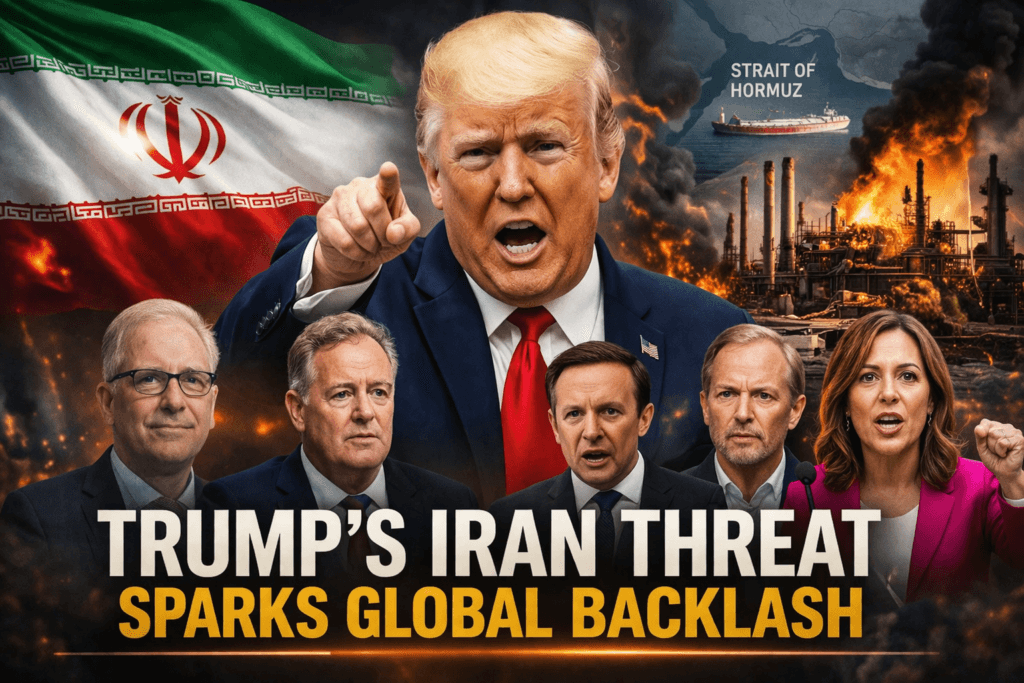
President Donald Trump’s Easter Sunday threat against Iran has triggered a wave of criticism from American lawmakers, media figures, and international commentators, many of whom say the language was reckless, inflammatory, and unbecoming of a U.S. president.
The controversy centers on a social media post in which Trump warned that Tuesday would be “Power Plant Day” and “Bridge Day” in Iran unless the Strait of Hormuz was reopened, using profane language and ending with the phrase, “Praise be to Allah.” The message quickly drew condemnation because it appeared to threaten civilian infrastructure at a time of already heightened tension in the Gulf.
Among the first to respond was commentator Jay Nordlinger, who argued that a president must distinguish between authoritarian governments and the people they rule. He warned that mocking or insulting ordinary citizens is not only bad judgment, but contrary to national interest. His point echoed a broader concern shared by many critics: that public threats directed at a hostile state can easily blur into hostility toward an entire population.
Several public figures reacted with sharper language. Broadcaster Piers Morgan called the post embarrassing and urged Trump to delete it. U.S. Senator Chris Murphy went further, describing the message as “completely, utterly unhinged” and suggesting that people within Trump’s Cabinet should be considering constitutional remedies. Historian Steven Beschloss said the post showed a man who should not be anywhere near the levers of power, while Michigan State Senator Dayna Polehanki publicly challenged Republican colleagues over what she described as Trump’s Easter message.
Other reactions reflected the breadth of the backlash. Keith Olbermann accused the president of threatening war crimes. Owen Jones warned that such a move could trigger wider regional and global consequences. Shane Claiborne framed the issue in moral terms, calling the statement sinful and “very unChristlike.” Additional criticism came from Sophia A. Nelson, Pete Wishart, Spencer Hakimian, Tom Joseph, Max Otte, Pemphero W. Mphande, and others who questioned Trump’s judgment, temperament, and fitness for office.
The uproar became even more striking when contrasted with a message circulating the same day from Pope Leo XIV, who called on those who have weapons to lay them down and urged those with power to choose peace through dialogue rather than force. Though not issued as a direct rebuttal, the Pope’s words offered a stark moral counterpoint to the mood created by Trump’s post.
The wider significance of the episode lies in the weight presidential language carries during international crises. The Strait of Hormuz is not just another geopolitical flashpoint; it is one of the world’s most critical energy corridors. Statements suggesting attacks on infrastructure in or around such a theatre do not remain rhetorical for long. They can unsettle markets, alarm allies, harden adversaries, and deepen fear among civilians who would bear the greatest cost of conflict.
For critics, this is no longer simply about offensive language on social media. It is about whether the occupant of the White House is speaking with the discipline, judgment, and restraint expected of a president during a volatile international standoff. That question, now amplified across political and ideological lines, is likely to remain at the center of the debate long after the post itself fades from public view.
About The Author