Islamabad Talks End Without U.S.-Iran Deal as Hormuz Dispute Persists
U.S.-Iran talks in Islamabad ended without a deal after 21 hours, with disputes over the Strait of Hormuz, nuclear demands, and frozen assets still unresolved.
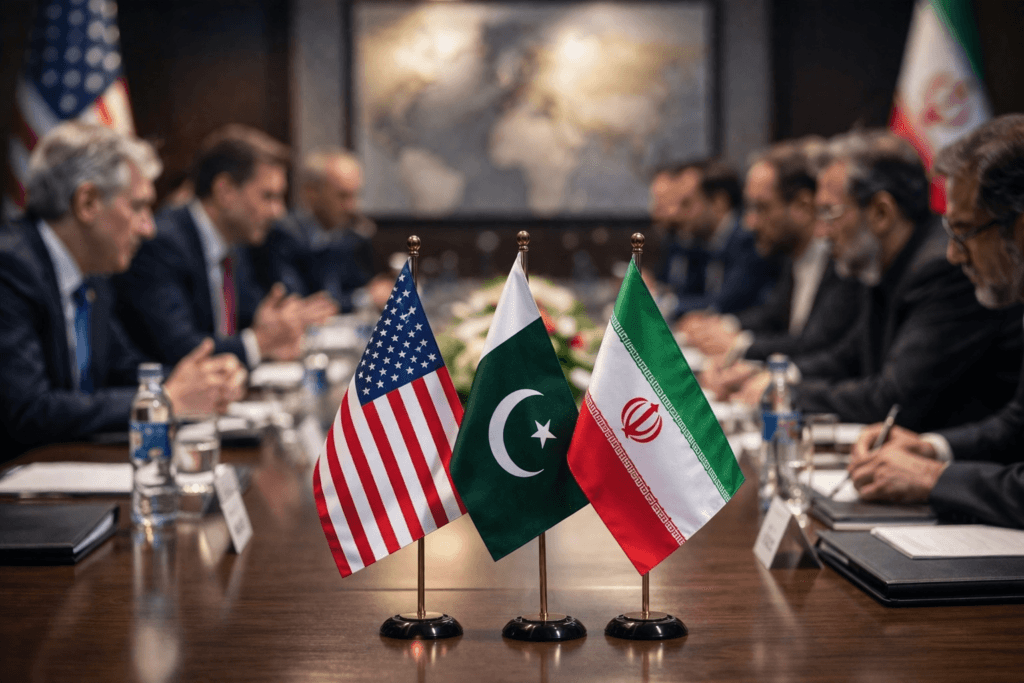
High-stakes talks between the United States and Iran in Pakistan ended without an agreement after roughly 21 hours of negotiations, leaving a fragile ceasefire in place but unresolved as key disputes — especially over the Strait of Hormuz — remain on the table.
The talks were held in Islamabad with Pakistan playing a central mediating role. Reuters reported that Pakistan had been deeply involved in the diplomatic effort, while AP said Pakistani mediators urged both sides to preserve the ceasefire and continue dialogue.
The negotiations broke down over major substantive issues. Reuters and AP both reported that one of the central sticking points was control and access through the Strait of Hormuz, while broader disagreements also included Iran’s nuclear programme, regional security demands, and the terms for any longer-term settlement.
Vice President JD Vance, who led the U.S. delegation, said the talks ended without agreement and blamed Iran’s refusal to accept core U.S. demands, particularly around nuclear weapons commitments. President Donald Trump, meanwhile, downplayed the setback and said the United States remained in a strong position regardless of whether a deal was reached.
Another point of dispute involved Iranian assets frozen abroad. Reuters reported that a senior Iranian source said Washington had agreed to release Iranian funds held in Qatar and other foreign banks, presenting it as a sign of seriousness, but a U.S. official denied that any such agreement had been made.
At the same time, the U.S. military announced it had begun efforts to clear mines from the Strait of Hormuz, a move Reuters said was part of a broader mission to secure commercial navigation through one of the world’s most critical energy routes. It remains unclear whether that step was coordinated with Iran or taken unilaterally.
The ceasefire that opened space for the Islamabad talks is still due to expire on April 22, leaving a narrow diplomatic window for both sides to return to the table. AP reported that additional discussions are expected, even though the first round ended without a breakthrough.
About The Author