Homeless shelter resident alleges Islamophobic assault at Brooklyn facility

Brooklyn, New York — A resident of a Brooklyn homeless shelter has alleged that he was violently assaulted during prayer in what he describes as a targeted, Islamophobic attack, raising serious questions about safety, religious freedom, and oversight within city-funded shelter facilities.
Malick Ayorinde Adjaho Toukourou, a former security officer who has been staying at the Renaissance Shelter on Ralph Avenue for approximately three weeks, told this reporter that he was attacked late on the night of January 16, 2026, while preparing to observe the Isha prayer. Toukourou, a practicing Sunni Muslim, said the assault occurred shortly before midnight inside the shelter and involved six to seven individuals armed with blades and wooden sticks.
According to Toukourou, the attackers targeted him because of his religious beliefs and his refusal to participate in what he described as widespread drug use and alcohol consumption within the shelter. He said he has faced mockery, rejection, and differential treatment from both fellow residents and staff since his arrival, particularly after raising concerns about what he called the “illegal use of drugs” inside the facility.
“I was attacked at the moment of prayer,” Toukourou said. “They wanted me out of the room. All they want are smokers like them. I believe they wanted to kill me.”
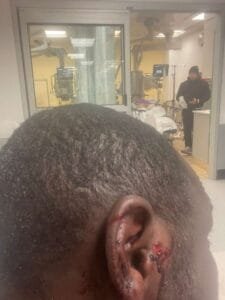 Toukourou sustained an ear injury during the attack and was later treated at Kings County Hospital. He expressed gratitude to the medical team and said he was cleared by security staff following the incident. He added that while he feels mentally resilient, he remains physically afraid.
The shelter resident alleged that staff members were complicit in the incident, claiming they ignored prior complaints and dismissed his concerns about safety and religious freedom. “I was told that management has no concern about the freedom of clients to smoke and act as they wish,” he said. “I believe the staff orchestrated this situation with the help of some clients because I spoke out.”
He further alleged that after the assault, he felt blamed and verbally reprimanded by staff, rather than supported as a victim. Toukourou said police were contacted but only documented his identification, adding that he has not yet filed a formal complaint with oversight agencies or pursued legal action.
The Renaissance Shelter has not responded to requests for comment regarding the allegations.
Toukourou believes the incident reflects a broader rise in Islamophobia and intolerance toward individuals who uphold strict moral or religious practices in communal living environments. Despite the trauma, he said the experience has strengthened his faith. “It encourages me to pray more and surrender to my Lord,” he said.
 Now seeking a permanent resolution, Toukourou says he hopes to return to his home country of Benin, where he believes he will be valued and safe. He is appealing for support to access employment training and raise funds for repatriation. “Violence leads to the cemetery,” he said. “I want to go where I am valued.”
He also issued a broader warning about the use of public funds for shelters, arguing that more investment should go toward skills training and rehabilitation rather than environments that, in his words, “create monsters and gangsters in society.”
Publicly available Google reviews of the Renaissance Shelter appear to echo some of the safety concerns raised by the victim, with several reviewers describing fear, neglect, and unsafe conditions.
A reviewer identified as Jayson “Smilez” M wrote: “They do not help, it’s also unsafe—many fear for their lives. There were bed bugs and poor customer service.”
Another reviewer, Noelia O. alleged that a loved one was left outside in the rain, while Young Master, in a lengthy post, described witnessing hatred, nighttime disturbances, delayed services, and a lack of access to caseworkers or employment assistance.
Anginel Diaz called for higher-level oversight, urging that complaints be escalated to city officials within the Department of Homeless Services (DHS), stating: “Someone needs to report them… DHS needs to fix the situation.”
While these reviews represent individual experiences and allegations, collectively they raise broader questions about shelter oversight, safety protocols, and responsiveness to residents’ concerns.
The incident comes amid heightened national concern over hate crimes and faith-based discrimination, particularly against Muslim communities. Advocates warn that vulnerable populations—especially those experiencing homelessness—often face compounded risks due to limited access to legal protection and oversight.
“This is not just about one man,” said a community advocate familiar with the case. “It’s about whether shelters funded by taxpayers are truly places of refuge—or places of fear.”
As investigations continue, the case has renewed calls for independent audits of shelter conditions, stronger protections for residents reporting misconduct, and faith-sensitive accommodations within publicly funded housing facilities.
About The Author