Op-Ed | War, Oil, and the Fragile Global Order: Why the Iran Conflict Is Reshaping the World Economy
By any economic, diplomatic, or strategic metric, the escalating war involving Iran has moved far beyond a regional conflict. Thirteen days into the crisis, the geopolitical shockwaves are already reverberating through global energy markets, financial systems, humanitarian corridors, and the architecture of international diplomacy. For economists, policymakers, and diplomats alike, the unfolding developments illustrate a familiar but dangerous truth: modern wars in energy-critical regions do not remain local; they quickly become global economic events.
The first and most immediate signal of this reality has been the surge in oil prices. Brent crude surpassing $100 per barrel represents more than a symbolic threshold. It reflects a structural disruption in global supply expectations. Prior to the conflict, oil was trading around $65. A 54 percent increase in less than two weeks signals panic pricing by markets that fear prolonged instability in one of the world’s most strategic energy corridors. When energy prices surge this quickly, the consequences ripple through every sector—from transportation and manufacturing to food production and household budgets.
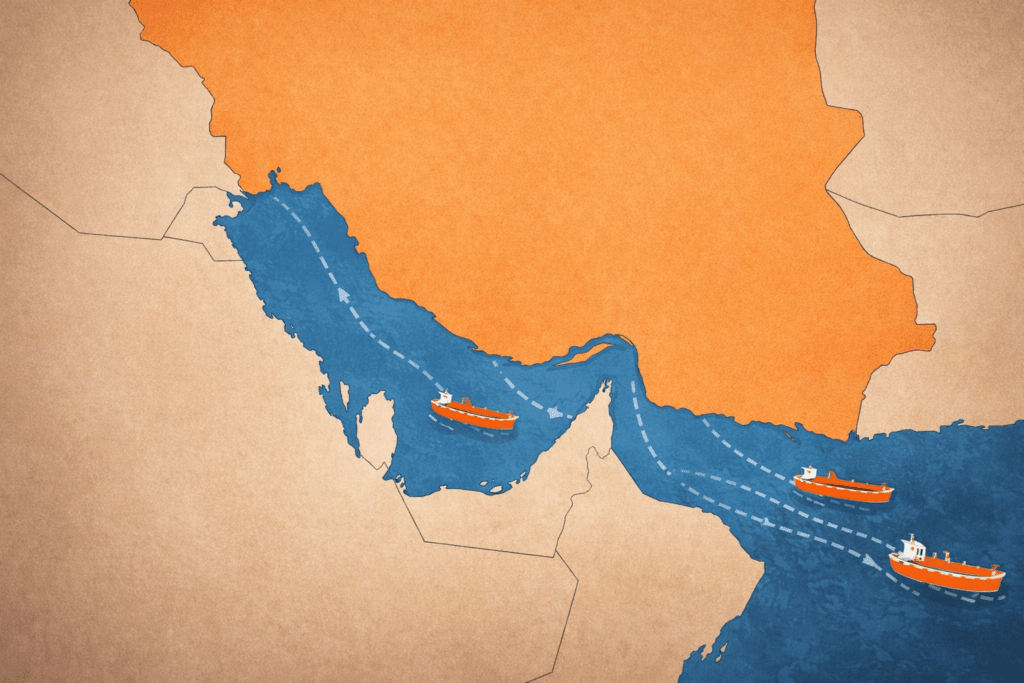
The Strait of Hormuz remains the central pressure point. Roughly one-fifth of global oil trade passes through this narrow maritime passage. Iran’s declaration that it will maintain the closure of the Strait as a strategic bargaining tool represents a calculated escalation. It signals that Tehran understands the leverage it possesses over global markets. The Strait is not simply a shipping route; it is a geopolitical choke point capable of disrupting the global economy.
Financial markets have already reacted. The Dow Jones Industrial Average dropping hundreds of points in a single day is not merely a reaction to war headlines. Investors are adjusting to a more complex risk environment: higher energy costs, prolonged geopolitical instability, and a central banking system unable to respond with traditional tools.
Goldman Sachs’ decision to postpone expectations for Federal Reserve interest rate cuts illustrates the deeper macroeconomic implications. Energy inflation feeds directly into broader price pressures. When oil rises above $100, transportation, logistics, manufacturing inputs, and consumer goods all become more expensive. Central banks cannot easily cut rates in such an environment without fueling additional inflation. In practical terms, this means mortgages remain expensive, business investment slows, and economic growth risks stagnation.
The war’s expansion beyond Iranian territory adds another layer of risk. Attacks near Basra in Iraq, one of the world’s most important oil export hubs, demonstrate that the conflict is no longer confined to Iranian waters. By targeting vessels near Iraqi infrastructure, the conflict threatens supply lines that support global energy security.
Military developments further complicate the geopolitical landscape. The crash of a U.S. military refueling aircraft in Iraq and the killing of a French soldier in a drone strike highlight an increasingly internationalized battlefield. Once soldiers from multiple Western nations begin dying in a regional war, the probability of broader escalation rises significantly.
Meanwhile, Iran’s internal political continuity has surprised many observers. The swift transition to Mojtaba Khamenei as Supreme Leader demonstrates institutional resilience within Iran’s power structure. Decapitation strategies in modern geopolitics rarely achieve the decisive outcomes planners envision. In Iran’s case, the leadership apparatus has demonstrated its ability to absorb shocks and continue operations.
On the battlefield, Iran’s most intense missile operations since the war began show that its military capabilities remain intact. Joint strikes involving regional allies illustrate that Tehran retains strategic partnerships capable of complicating Israeli and Western military planning.
Perhaps the most underreported dimension of this war is the humanitarian catastrophe unfolding alongside it. Over three million displaced people inside Iran and hundreds of thousands more in neighboring Lebanon signal a regional crisis that could destabilize surrounding countries. Refugee flows historically reshape political landscapes, strain host economies, and fuel long-term social tensions.
Diplomatically, the war currently lacks a clear exit strategy. Iran’s president has offered conditions for ending hostilities—recognition of sovereign rights, reparations, and guarantees against future attacks. Yet Washington’s response suggests that nuclear considerations remain the dominant priority in U.S. calculations. When negotiation frameworks fail to align, diplomatic off-ramps become difficult to construct.
One of the most revealing developments has been the quiet easing of restrictions on Russian oil. In essence, the United States has acknowledged that the global energy market cannot absorb a prolonged disruption in Gulf supplies without alternative sources. This decision highlights the brutal pragmatism of energy geopolitics: strategic alliances can shift quickly when market stability is threatened.
From a policy perspective, the broader lesson is clear. Energy security remains the backbone of global economic stability. Conflicts in energy-producing regions do not simply affect those regions—they reshape inflation, financial markets, interest rate policy, and global trade patterns.
The Iran war is not only a military confrontation. It is an economic stress test for the entire international system.
For ordinary citizens around the world, the consequences are already tangible: rising fuel prices, higher interest rates, and greater economic uncertainty. For policymakers, the challenge is even greater. Preventing further escalation while stabilizing markets will require diplomatic creativity, strategic restraint, and international coordination rarely seen in moments of crisis.
History reminds us that wars in the Middle East rarely remain contained. What begins as a regional conflict often evolves into a global economic turning point.
Day thirteen may still be early in the timeline of this war—but the global consequences are already impossible to ignore.
Mutiu Olawuyi
About The Author