JCRC-NY condemns antisemitic remarks reported at Park Slope Food Coop meeting
JCRC-NY has condemned reported antisemitic remarks made at a Park Slope Food Coop meeting, urging human rights agencies to review the incident and protect Jewish members from harassment.
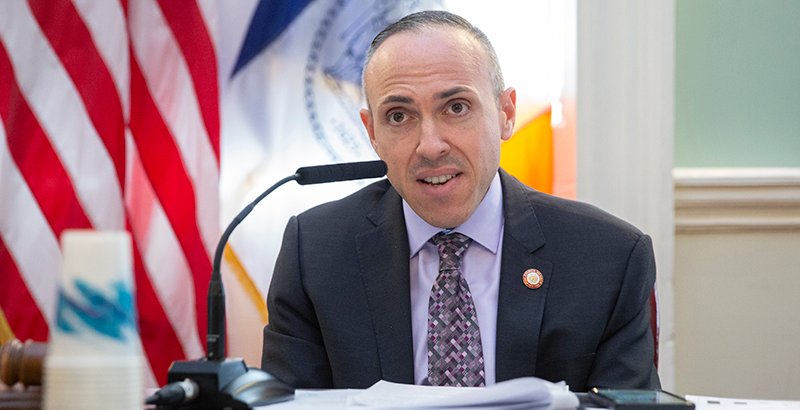
The Jewish Community Relations Council of New York (JCRC-NY) has issued a strong public response following reports that a member of the Park Slope Food Coop made antisemitic remarks during a debate over a proposed boycott of Israeli goods.
In a statement released today by the organization, Mark Treyger, CEO of JCRC-NY, said the language reportedly used at the general meeting crossed the line from political disagreement into anti-Jewish hatred.
According to Treyger, the remarks included Nazi comparisons, the collective blaming of Jews for geopolitical disputes, and accusations of “Jewish supremacy.” He rejected the idea that such language could be defended as ordinary criticism of Israeli policy.
“This inflammatory rhetoric does not emerge in a vacuum,” Treyger said. “It is the predictable result of a sustained disinformation and demonization campaign advanced by some Coop members under the pretext of legitimate criticism of Israel. It is not. It is textbook antisemitism.”
The statement reflects a broader concern increasingly visible in public life: that debates over the Middle East can, in some spaces, slide into rhetoric that targets Jewish people not as individuals with differing views, but as a collective. That distinction is central. Political disagreement is protected in a democratic society. Collective blame and dehumanizing language are not the same thing.
JCRC-NY urged both the New York State Division of Human Rights and the New York City Commission on Human Rights to review the reported incident and take appropriate action if warranted.
“Jewish members of the Coop should not be demeaned, targeted, made to feel unsafe, or subjected to collective blame because of disagreements over Middle East policy,” Treyger said.
The organization also argued that the incident shows why frameworks such as the IHRA definition of antisemitism remain important for identifying both classic and contemporary forms of anti-Jewish bias.
At a deeper level, the controversy raises a civic question for New York itself. This city is home to one of the world’s largest and most diverse Jewish communities, and it also prides itself on pluralism, free expression, and coexistence across sharp political differences. When public discourse turns into identity-based hostility, that civic balance is weakened.
For New York, the challenge is not to suppress debate, but to insist that debate remain grounded in dignity, fairness, and the rule of law. Institutions that serve the public, whether cooperatives, schools, workplaces, or civic groups, carry a responsibility to ensure that disagreement does not become harassment and that political passion does not become a cover for hate.
JCRC-NY said accountability is essential not only for Jewish New Yorkers, but for the larger principle that all communities deserve protection from discrimination and intimidation.
About The Author