China says Xi-Trump Summit sets new path for strategic stability
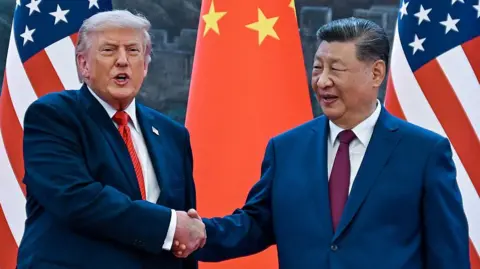
Chinese Foreign Minister Wang Yi has said the recent summit between President Xi Jinping and U.S. President Donald J. Trump marked a new stage in China-U.S. relations, with both leaders agreeing to build what Beijing described as “a constructive China-U.S. relationship of strategic stability.”
Wang made the remarks during a briefing on May 15, 2026, following President Trump’s visit to China. According to the Ministry of Foreign Affairs of the People’s Republic of China, Wang said the two presidents held long discussions on bilateral relations, world peace, development, and major international concerns. He described the talks as “open, thorough, constructive, and strategic.”
The Chinese foreign minister said the summit sent an important message to the world: that China’s national rejuvenation and America’s development ambitions do not have to be treated as opposing paths. In his words, China and the United States can “help each other succeed” and advance global well-being if they manage their relationship responsibly.
At the center of the briefing was the idea of strategic stability. Wang explained that the new vision should mean cooperation as the main direction, competition kept within proper limits, differences managed without turning relations into a “roller coaster,” and peace treated as the basic expectation between the two powers.
He warned that confrontation between China and the United States would carry consequences that neither country, nor the wider world, could afford. He added that both sides must respect each other’s development paths, core interests, major concerns, and right to development.
The summit also produced commitments to continue high-level engagement. Wang said President Xi and President Trump agreed to remain in close contact through meetings, phone calls, and letters. He also said President Xi is expected to pay a state visit to the United States in the fall at President Trump’s invitation.
Beyond presidential engagement, the two sides agreed to expand exchanges in foreign policy, military-to-military relations, economy and trade, public health, agriculture, tourism, people-to-people ties, and law enforcement. Wang said these channels are expected to help both countries “lengthen the list for cooperation and shorten the list of irritants.”
People-to-people exchange was presented as one of the hopeful outcomes of the summit. Wang said President Xi announced an initiative to invite 50,000 young Americans to China for exchange and study programmes over five years. He also noted that President Trump welcomed Chinese students to the United States, describing two-way educational exchange as important for the future of bilateral relations.
The Taiwan question was also discussed. Wang restated China’s position that Taiwan is an internal matter and described it as the most important issue in China-U.S. relations. He said proper handling of the issue would help keep the overall relationship stable, while mishandling it could put the wider relationship in danger.
On trade, Wang said both leaders discussed economic and commercial ties, including market access, agricultural products, reciprocal tariff reduction, and two-way trade. He said economic and trade teams from both countries produced “generally balanced and positive outcomes,” including plans to establish a board of trade and a board of investment, with details still under consultation.
The briefing also addressed international crises. Wang said President Xi and President Trump exchanged views on the Middle East and Ukraine. On the Middle East, Wang said China supports dialogue and believes the use of force cannot solve problems. On Ukraine, he said both China and the United States want an early end to the conflict and would maintain communication toward a political settlement.
The summit reflects a necessary effort to reduce uncertainty between the world’s two largest economies. For Africa and the wider Global South, the direction of China-U.S. relations matters deeply because tension between both powers can affect trade, investment, food security, technology, climate cooperation, peacebuilding, and development financing.
The real test, however, will not be the language of the summit alone. Strategic stability will depend on implementation, restraint, continuity, and whether both governments can manage disputes without allowing competition to become confrontation.
As Wang concluded, China says it is prepared to work with the United States to follow through on the understandings reached in Beijing and to approach the relationship from a broader, longer-term perspective. For the rest of the world, that commitment will be measured by whether the two powers can turn diplomatic language into practical cooperation that protects peace and improves lives.
About The Author