Building a Curriculum for a Culture of Peace Part VI:
AI as a Servant of Sacred Scholarship

Reflections from the 3rd International Dialogue of Civilizations and Tolerance Conference
By Rebecca Abrahamson
Co-Director, Al-Sadiqin Institute
In the United Arab Emirates, we felt welcomed.
Two hundred nationalities thrive in the UAE, hosted by a benevolent and forward-thinking Islam, and its welcome guests range from the many sects of Christianity to Bahai communities to Hindus; indeed, the BAPS Hindu Mandir in Abu Dhabi is described as the largest Hindu temple in West Asia. Jewish citizens likewise testify to the kindness of the locals and the determination of the government to ensure their security and comfort. Arabic is the official language of the UAE, while English is widely used in daily life.
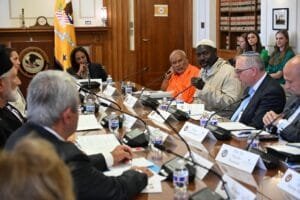
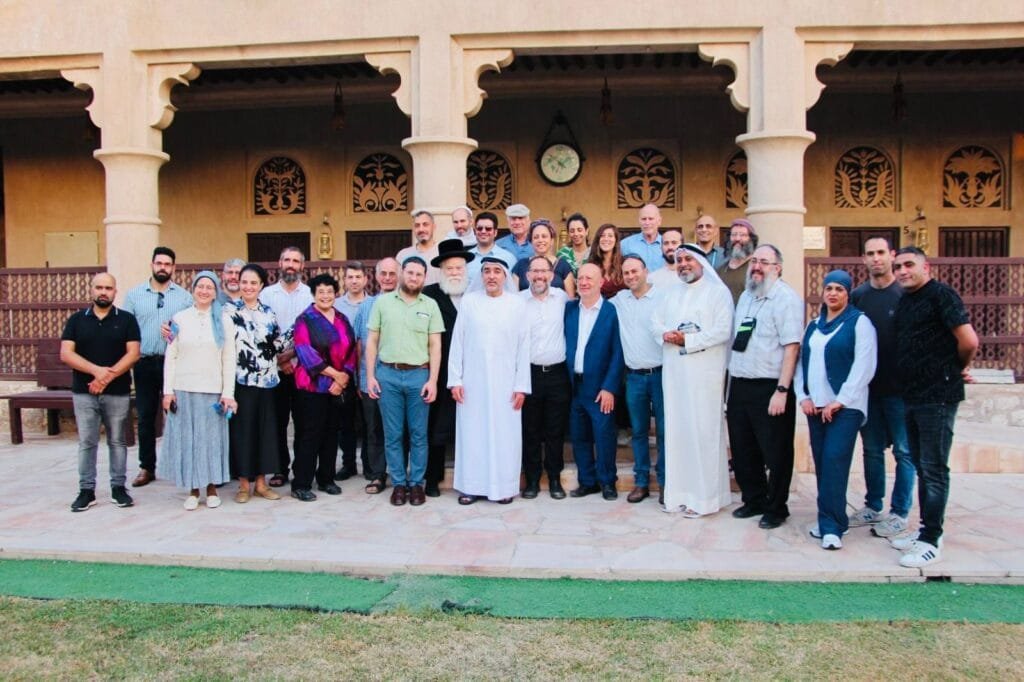
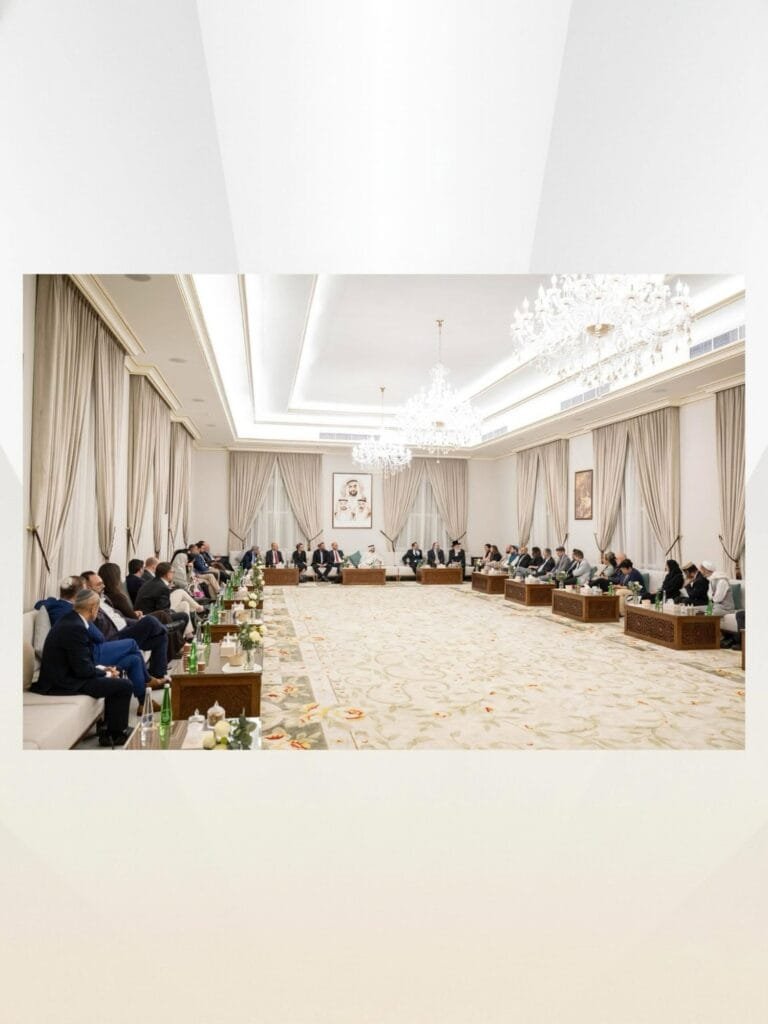
This devotion to tolerance makes the UAE the perfect venue for the third annual Dialogue of Civilizations and Tolerance Conference, held June 3-5, presented by the Emirates Scholar Center for Research and Studies in partnership with the Abrahamic Family House in Abu Dhabi. This year’s theme: “The Impact of New Media and AI on Family and Community”. My husband Ben and I were there as part of Israel’s Interfaith Diplomacy Field which had organized a group of scholars, rabbis, and religious leaders to attend.
And tolerance is no mere slogan in the UAE. One host shared, “I visited Greece and heard a couple speaking Hebrew with their children. I asked, ‘Are you Israeli?’ And they stiffened. There I was in my white Emirati robes, I quickly added, ‘please be at ease, we are friends, and you are always welcome to visit us in Abu Dhabi.’” He continued, “It made me sad to see that Israelis fear traveling to Europe because of the antisemitism there. Israel cannot be a jail; we aim to make Israelis feel welcome here.”
The local Jewish residents confirmed that the UAE is determined to make all its visitors and residents free to travel and worship as they please.
A story from the UAE’s founding generation illustrates this spirit. The UAE was formally proclaimed on December 2, 1971, when six emirates entered the federation; Ras Al Khaimah joined on February 10, 1972, completing the seven-emirate union. One of the founding sheikhs, it was said, was supervising a building construction site; he asked his Christian workers, “Where do you pray” and they pointed to a caravan. This sheikh would have nothing of it and actually built a church for them.
To us, this reflected a beautiful Islamic ideal: the believer as gracious host, protector, and defender – daf’I – of the guest.
And this made it the perfect location for this conference, centered on the realities of Artificial Intelligence today. Is AI servant or master? How can we avoid algorithmic bias so prevalent on the internet? Can its ability to enrich knowledge at the same time erode family life and traditional values? “Seventy percent of what influences children after the age of eleven is from outside the home.
How much do we want the values of the home to be a priority, and in facing the reality of AI, how can we harness it for our good?” One shared her perspective as a dean at a rabbinical theological seminary in the United States, “There are graduating rabbis who say that they refuse to even look at AI.” This attitude may be shared by many traditionalists, but denying the existence of a problem rarely solves it. Another scholar said, “Let’s sit with our children and use AI together, then process it as a family.” This forward-looking attitude is basic to the values of the UAE, as it navigates the balance of progress while remaining grounded in tradition.
To elaborate, residents are encouraged to preserve their heritage while remaining loyal to the state. Here there is no contradiction between patriotism and pride in one’s heritage. On the contrary, in this model, a strong sense of belonging, identity, and purpose is bestowed. This is no melting pot that threatens culture, nor is it patriotism at the cost of cultural identity. One participant from Israel praised this blend, calling it refreshing to hear unapologetic pride in one’s heritage, downplayed in the West.
It is this backdrop that Ben presented his use of AI in translating the corpus of Islamic writings into English.
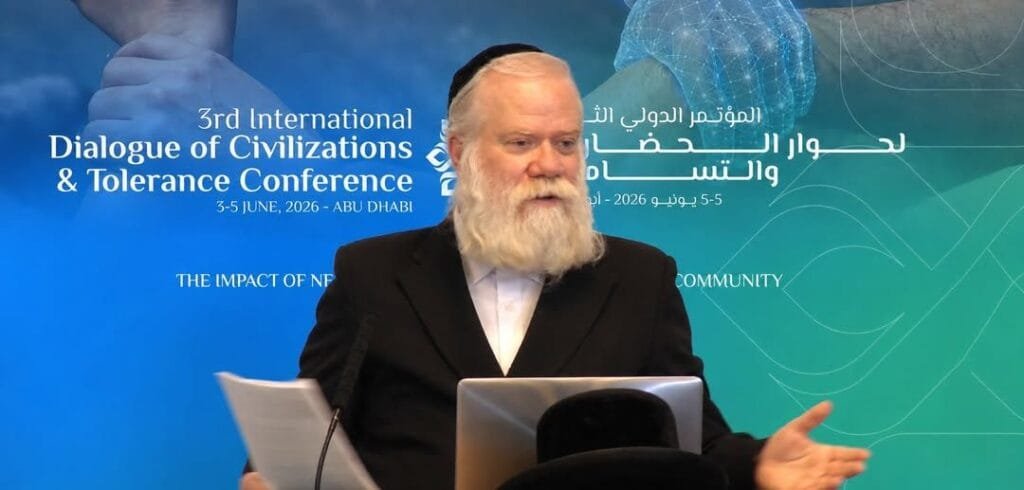
He presented recent projects of the Al-Sadiqin Institute using AI responsibly. The first project is the release of Volume 1 of a complete English translation of Ibn Hazm’s al-Fiṣal fī al-Milal wa-l-Ahwāʾ wa-l-Niḥal, accompanied by critical commentary. The second is the release of thirty-four volumes of Tafsīr al-Qurʾān: A Complete English Translation of Classical Qurʾānic Commentaries, presenting accessible English renderings of major classical commentaries, including al-Ṭabarī, al-Baghawī, al-Qurṭubī, al-Bayḍāwī, Ibn Kathīr, al-Jalālayn, al-Suyūṭī, and al-Shawkānī. The third is in process: the construction of a translated, segmented corpus of ninety-five major Islamic works prepared for AI-assisted querying and research.
The texts are prepared with metadata: author, date, school/tradition, genre, title, and reason for inclusion. This matters because AI retrieval must not flatten all sources into one undifferentiated pile.
Next, the texts are segmented. A whole book is too large to handle responsibly in one piece. A paragraph, report, or passage can be retrieved, checked, cited, and compared. Each segment preserves its local context: chapter heading, topic, Arabic text, English translation, notes, and neighboring passages. This makes the work auditable. A reader can then trace a claim back to the actual source.
Ben’s method uses an agent-based translation loop, which he adapted for this project. One AI agent produces a clear English draft. Another agent acts as a critic, comparing the English against the Arabic and looking for omissions, mistranslations, or problems in isnād and terminology. A revision agent then corrects the draft. The review repeats until the segment is usable. Difficult passages remain under human scholarly review.
Only after this process does AI become a research assistant. It can search the corpus for patterns. It can compare how key terms are used. It can find neglected readings. It can group sources by genre or century. It can show where a later polemic hardened an earlier, more flexible teaching. But even then, AI does not decide the conclusion. Every result must be checked against the original text, the genre, and the religious tradition.
These projects address a central challenge of the digital age: religious communities increasingly encounter each other through short media fragments, online controversy amplified by algorithms, and inherited polemical summaries rather than through primary sources. By making core Islamic materials searchable, readable, and critically annotated, the Institute seeks to move Muslim-Jewish dialogue from goodwill alone to documented source-based engagement. The goal is to identify neglected building blocks within Islamic tradition that can support mutual recognition, honest disagreement grounded in sources, and a covenantal model of coexistence. In this way, digital humanities and AI can strengthen rather than weaken family and community life, provided that they are anchored in respect for inherited religious law.
The importance of this project is not only that these texts are translated. It is that they are made accessible together, in a way that is less captive to search-engine ranking, repetition, and algorithmic bias.
Much of what students and community workers encounter online is shaped by what is most searchable, most quoted, or most controversial. A single commentary or polemical passage can appear to represent “the Islamic view,” while a broader comparison reveals interpretive range, debate, tension, and development over time.
A disciplined AI corpus can help bring the obscure into the light. The student, scholar, and Muslim-Jewish dialogue worker can compare how different exegetes approached the same verse, especially verses concerning Jews, the Torah, Banū Isrāʾīl, covenant, abrogation, the People of the Book, and righteous non-Muslims. This does not mean that every obscure source is authoritative. It means that the conversation becomes more honest because it is no longer limited to the most popularly repeated passages. It opens access to the broader field of Islamic writing: tafsīr, hadith, law, history, theology, polemic, devotional memory, and neglected readings that may preserve deeper possibilities for understanding.
This translation project therefore gives scholars and community leaders a tool for asking not only what the Qurʾān says, but how Islamic scholarship has understood and applied its language across centuries.
The free PDF distribution of these volumes is also significant. Access matters ethically and practically. Many students, religious teachers, and community leaders who participate in dialogue do not have access to large Arabic libraries or expensive academic translations. By providing accessible English translations, the project lowers the barrier to serious engagement and reduces dependence on AI answers generated without transparent source control.
At Al-Sadiqin, AI will thus help make classical sources more accessible and help in building a curriculum for a culture of peace.
For Muslims and Jews, this is especially important. We do not need a future built on forgetting our differences. We need a future in which our differences are understood within the service of the One God. As the early Muslim exegete Qatada said, the religion is one, while the revealed laws differ: one dīn, different sharīʿahs; one God, differentiated covenantal responsibilities.
That is a vision worth translating carefully. It is also a vision worth carrying home from Dubai and Abu Dhabi, God willing, into the next stage of our work.
—
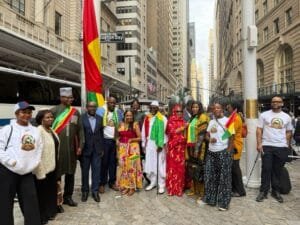
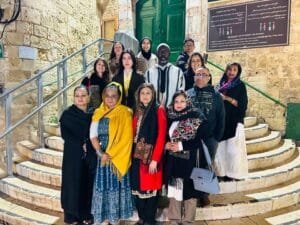
Israel’s Interfaith Diplomacy Field with host Dr. Ali AlNuaimi of the Manara Center for Coexistence and Dialogue
Israel’s Interfaith Diplomacy Field with host Ahmed Obaid Al Mansoori, founder of Crossroads of Civilizations Museum (CCM)
Representative Tafsir Works in the Translation Project
Commentary Author death Methodological value
al-Ṭabarī 923 Transmitted tafsir; early reports; broad exegetical range
al-Baghawī 1122 Concise Sunni tafsir relying heavily on transmitted material
al-Qurṭubī 1273 Legal tafsir emphasizing Qurʾānic rulings and jurisprudence
al-Bayḍāwī 1286 Linguistic and theological synthesis of earlier tafsir
Ibn Kathīr 1372 Hadith-based tafsir widely read in modern settings
al-Jalālayn 1505 Compact teaching commentary
al-Suyūṭī 1505 Extensive transmitted reports in al-Durr al-Manthūr
al-Shawkānī 1834 Combined transmitted and analytical commentary with legal insight
Link to the project: http://www.alsadiqin.org/tafsir/
About the conference: https://idctconference.org/about/
About The Author