Employment for All: Disability Must Not Mean Exclusion
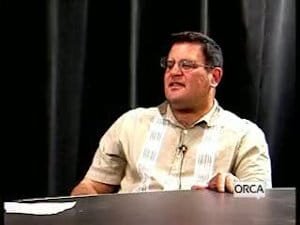
By Lawrence Seiler
New York Parrot Journalist | Abled and on Air
Work is more than a paycheck. Work is dignity. Work is identity. Work is participation. Work is the right to wake up in the morning and know that your skills, your time, your mind and your presence still matter.
For people living with disabilities, the struggle for employment is often not a struggle against inability. It is a struggle against systems that still do not know how to see ability clearly.
Too many people with diverse abilities are ready to work, willing to work and capable of contributing, yet they are blocked by outdated assumptions, inaccessible hiring processes, weak support systems, discrimination or the quiet cruelty of low expectations. Many are pushed only toward entry-level work, even when their talents, education, experience and ambition reach much higher.
But let us be honest: every honest job has dignity. A job that begins at the bottom can still become a doorway. A position that starts small can still build confidence, income, discipline, networks and independence. For example, New York City sanitation work offers a strong starting base pay and a real path into public service. The point is not that everyone must take the same job. The point is that no one should be made to feel that work is beneath them, or that disability makes work impossible.
My own journey has taken me through many decades, many industries and many battles. Before the Americans with Disabilities Act was signed into law in 1990, I faced workplace abuse and discrimination that many people today may find hard to imagine. Those experiences were painful, but they did not end my story.
 Over time, laws changed. Language changed. Public awareness changed. Rosa’s Law helped remove harmful and dehumanizing language from federal health, education and labor policy. These changes mattered because words shape systems, and systems shape lives.
Still, the law alone does not create opportunity. People do. Institutions do. Employers do. Families do. Communities do. And sometimes, people with disabilities must also learn how to knock on doors that were never designed with them in mind.
I have worked as a summer camp counselor through the Summer Youth Employment Program. I have worked with the CUNY Research Foundation. For 30 years, I helped build media platforms such as “Special People Special Issues” at BronxNet. Today, I work with Bronx Post and produce “Abled and on Air.”
I did not get here because the road was easy. I got here because I refused to accept that barriers were the same thing as destiny.
The numbers remain serious. Millions of adults with disabilities across the United States are not working, even while millions more are employed and contributing every day. That gap should trouble every policymaker, employer, school, newsroom and community leader. It means that talent is being wasted. It means households are being weakened. It means our economy is smaller than it should be. It means people are being left outside the room when they should be helping build the future inside it.
For anyone struggling to find work, I want to say this clearly: do not disappear into discouragement. Ask for help. Use the resources available. Push beyond the shame that society too often places on people who need support.
One important resource in New York is ACCES-VR, which stands for Adult Career and Continuing Education Services-Vocational Rehabilitation. ACCES-VR helps people with disabilities prepare for, find and maintain employment. Its services may include training, education support, vocational counseling, college assistance in coordination with FAFSA, and guidance for those who want to start their own businesses.
That last point is important. Employment does not always mean waiting for someone else to hire you. Sometimes it means building something of your own. A small business. A media project. A service. A skill-based enterprise. A community solution. People with disabilities are not only job seekers. They can also be job creators.
But responsibility must not be placed on individuals alone. Employers must do better. Government agencies must communicate better. Schools must prepare students earlier. Vocational programs must connect training to real jobs. Families must encourage independence without abandoning protection. Communities must stop treating disabled people as objects of pity and start recognizing them as citizens with rights, gifts and responsibilities.
We also need a cultural shift. Disability inclusion cannot be reduced to a poster, a speech or a once-a-year awareness event. Inclusion must show up in hiring, transportation, technology, training, media representation, workplace accommodation and promotion opportunities.
A society is not judged only by how it celebrates the powerful. It is judged by how it makes room for those whom it once pushed aside.
To every person with a disability looking for work: your challenge is real, but your life is not over. Your path may be different, but different does not mean useless. Start where you can. Learn what you must. Ask questions. Seek training. Use ACCES-VR. Apply. Volunteer if it opens the right door. Build your confidence. Protect your dignity. Do not let rejection become your identity.
To employers: stop confusing disability with inability. Many people with disabilities bring patience, problem-solving, loyalty, creativity, resilience and lived intelligence that no textbook can teach.
To policymakers: employment access is not charity. It is economic justice. It is public policy. It is human rights.
And to our communities: let us stop wasting people.
Everyone deserves a fair chance to work, serve, earn, grow and belong. Disability may shape a person’s journey, but it must never be allowed to erase their future.
For more information on vocational rehabilitation services, visit www.acces.nysed.gov. For federal student aid information, visit www.fafsa.gov.
Please watch “Abled and on Air” on Parrot TV as we continue this important conversation.
Best regards,
Lawrence Seiler
New York Parrot | Abled and on Air
Edited by Mutiu Olawuyi
About The Author