Muslims for Israel Day Parade draws calls for courage, trust and interfaith partnership
Muslim leaders Soraya Deen and Sheikh Musa Drammeh say participation in New York’s Israel Day Parade promotes courage, trust, Muslim-Jewish solidarity and peacebuilding beyond political division.
By Mutiu Olawuyi
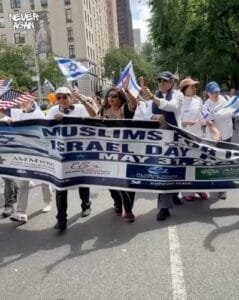
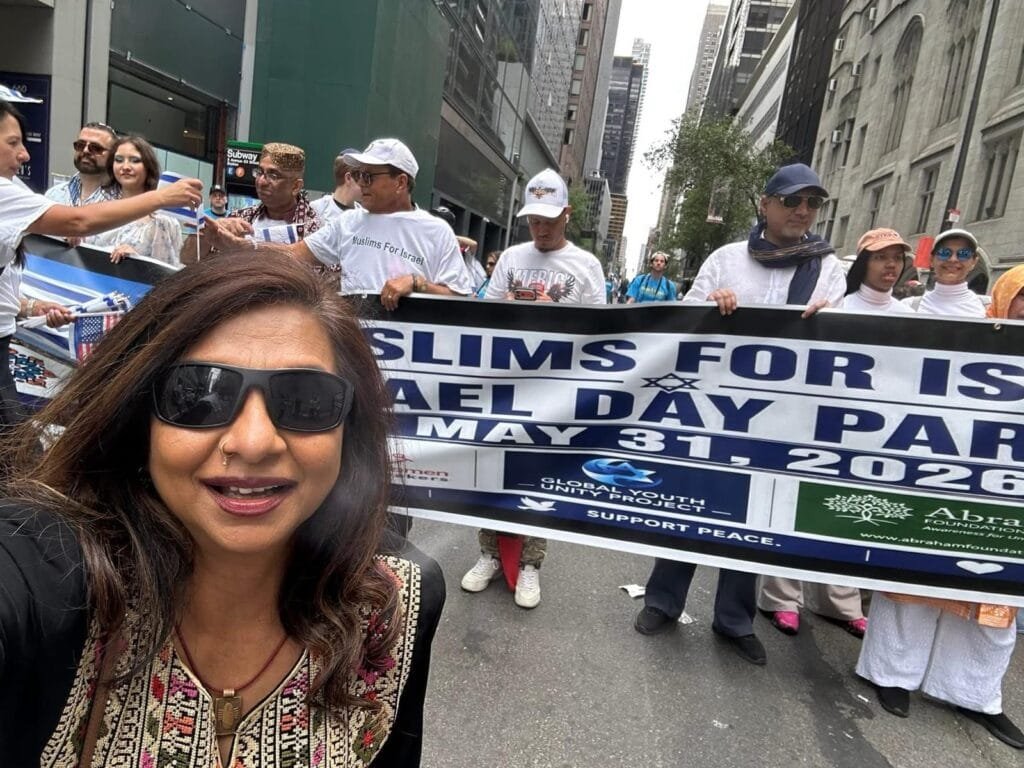
Muslim participation in the Israel Day Parade in New York, which took place on May 31, has drawn attention as faith and community leaders frame the moment as an act of moral courage, public solidarity, and bridge-building during a period of rising tension, antisemitism, Islamophobia, and polarization.
Among the voices supporting the initiative are Soraya Deen and Sheikh Musa Drammeh, who both described the participation of Muslims in the parade as a necessary statement against hatred and a step toward rebuilding trust between Muslim and Jewish communities.
Deen said her decision to participate was rooted in her belief that solidarity matters most during difficult times.
“As a Muslim, I believe showing up for one another matters most during difficult times, not only during comfortable moments,” she said. “I am marching because I refuse to accept a future where Muslims and Jews see each other only through anger, fear, or political slogans.”
She said her years of work with both Jewish and Palestinian communities have shown her that coexistence is possible when people are willing to speak honestly, listen deeply, and recognize one another’s humanity.
“Too often, extremists on all sides try to convince us that solidarity is betrayal and dialogue is weakness. I reject that completely,” Deen said.
Her remarks come at a time when public conversations about Israel, Palestine, antisemitism, and Muslim-Jewish relations are often dominated by anger, suspicion, and online confrontation. Deen warned that social media often rewards outrage while ignoring the everyday reality of Muslims and Jews who live, work, study, and raise families in the same cities.
“Ordinary Muslims and Jews still live together, work together, and raise families in the same cities. That reality deserves visibility too,” she said.
According to Deen, the parade helps create a different public story by showing that coexistence is not merely an ideal, but something visible and possible.
“When Muslims march alongside Jews publicly and peacefully, it challenges the false narrative that our communities are destined to be enemies forever,” she said.
She acknowledged that peacebuilding today requires courage, especially for people who are willing to stand between extremes.
“Many people are afraid to stand in the middle today because they are attacked from both extremes,” Deen said. “But peacebuilding has always required moral courage: the courage to humanize people others want us to hate.”
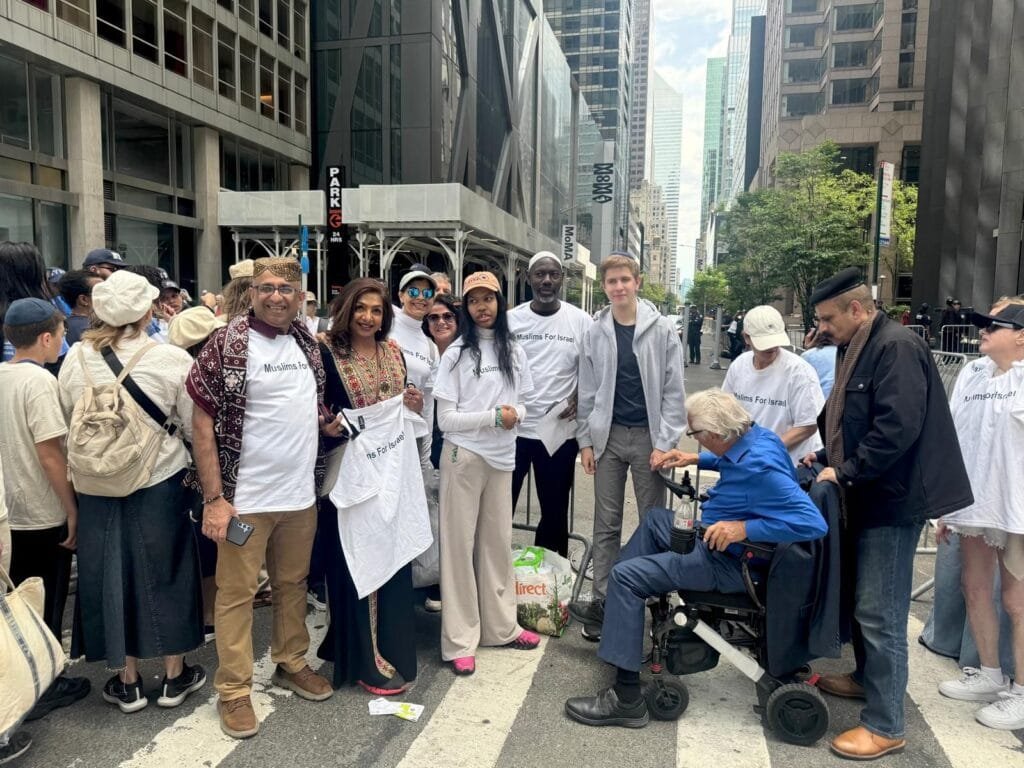
For Deen, Muslim participation also provides an opportunity to reject antisemitism openly and firmly, while giving Jewish communities a chance to recognize that many Muslims seek partnership, safety, and peace.
“The parade itself will not solve the Middle East conflict,” she said. “But it can help rebuild something essential here in New York: trust, relationships, and understanding.”
Sheikh Musa Drammeh also described Muslim participation in the Israel Day Parade as a response to rising antisemitism and what he called globalized anti-Israel sentiment.
“Under the current condition of rising antisemitism and globalized anti-Israel, righteous Muslim leaders are taking the lead to counter both, and participating in the Israel Day Parade on 5th Avenue is part of that leadership,” Drammeh said.
He argued that more Muslims are beginning to see support for Israel’s safety and security as connected to the broader goal of regional peace and stability.
“Muslims are slowly recognizing the importance of supporting Israel’s safety and security in order to achieve regional peace stability,” he said. “The rising antisemitism is directly related to the anti-Israel movements.”
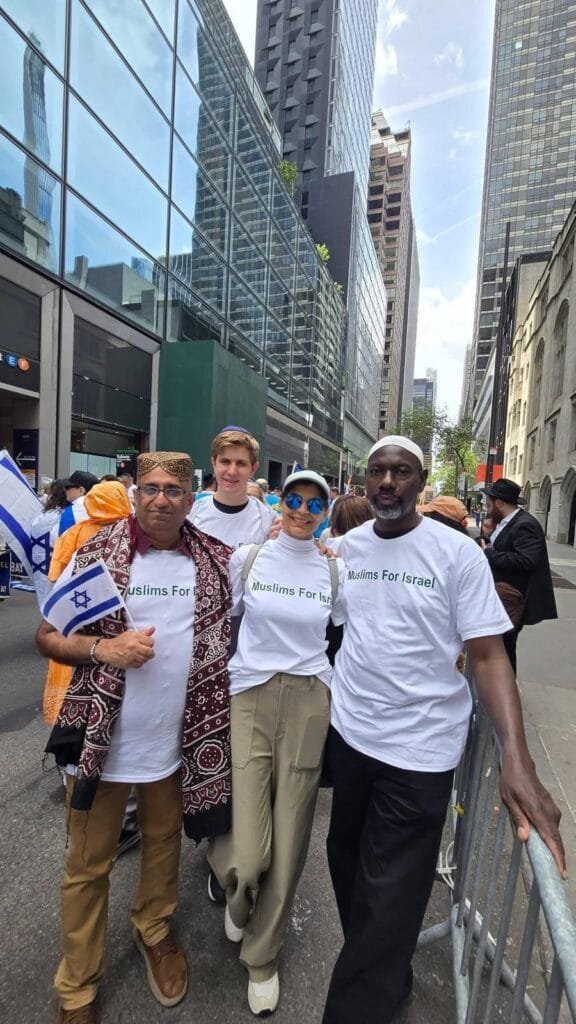
Drammeh said parade organizers and Jewish participants were appreciative of Muslim participation, especially because it marked a significant public gesture at a sensitive political moment.
“Parade organizers and Jewish participants were so appreciative of Muslim participation to the parade for the first time,” he said, adding, “We will build it from here.”
Both leaders emphasized that symbolic action must be followed by sustained engagement. Deen said public gestures matter, but long-term peacebuilding requires structure, honesty, and continued presence after the cameras leave.
“Symbolism matters, but symbolism alone is not enough,” she said. “Real peacebuilding requires organization, consistency, and courage after the cameras leave.”
She called for honest dialogue among faith leaders, including deeper education around Zionism, as well as grassroots organizing that can build real networks between communities.
“We need grassroots organizing, not endless panels alone,” Deen said. “Communities must build real networks capable of protecting one another, mobilizing during crises, and creating a culture where coexistence becomes normal rather than exceptional.”
The participation of Muslim leaders in the Israel Day Parade adds a new layer to New York’s interfaith landscape. In a city where Muslim and Jewish communities often live side by side, the event highlights the possibility of disagreement without dehumanization, solidarity without erasure, and dialogue without surrendering moral conviction.
At its heart, the message from both Deen and Drammeh is that peace cannot be built by silence, fear, or separation. It requires visible courage, shared protection, and a willingness to keep showing up even when doing so is uncomfortable.
As Deen put it, “Peace is not built in one parade. It is built through relationships, accountability, and the willingness to keep showing up for each other long after the headlines fade.”
About The Author