NYC public schools launches district working groups to build stronger, more integrated schools
By Mutiu Olawuyi
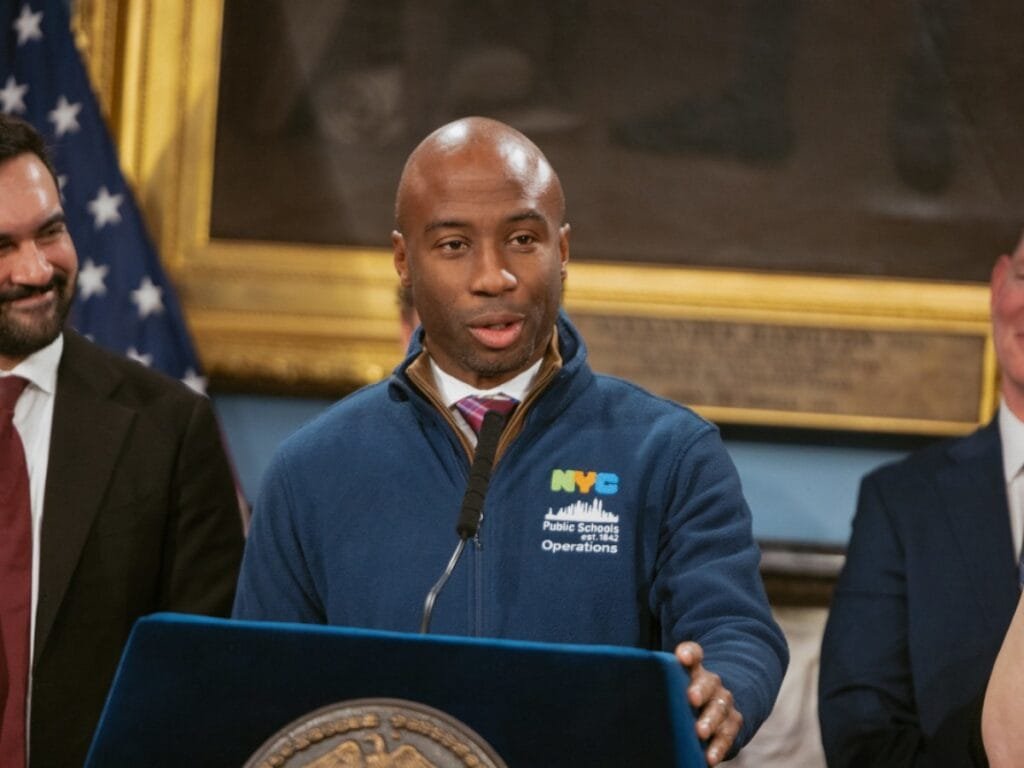
New York City Public Schools Chancellor Kamar Samuels has launched new District Working Groups in five school districts as part of a phased effort to build a stronger, safer, academically rigorous and more integrated public school system.
The working groups began on June 17, 2026, in Districts 3, 7, 13, 16 and 25, covering communities including the Upper West Side and West Harlem, the South Bronx, Brooklyn Heights and Fort Greene, Bedford-Stuyvesant, and North-Central Queens.
The announcement was made during a fireside chat between Chancellor Samuels and author Heather McGhee. According to NYC Public Schools, the groups will develop customized proposals to address structural and instructional inequities in their districts while expanding access to quality education, student support, safety and opportunity.
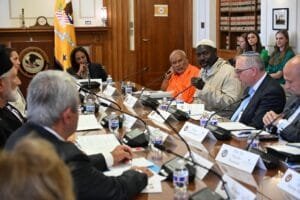
The initiative places teachers, principals, parent leaders and community organizations at the center of the planning process. Convened by district superintendents, the groups will meet monthly throughout the year to identify local challenges and propose solutions tailored to each district.
NYC Public Schools said the goal is to create school communities where students are not only taught at high academic standards, but also supported through research-based interventions, expanded opportunities, mental health services, multilingual learner support, special education expertise, arts programming and stronger family engagement.
“A truly integrated school offers more than demographic diversity — it provides accelerated and remedial coursework, robust arts programming, multilingual learner services, IEP specialists, mental health support, and an engaged family community,” Chancellor Samuels said.
Samuels said the work must go beyond placing students from different backgrounds in the same buildings. He said true integration must also consider ability, socioeconomic status, language, academic opportunity, cultural responsiveness and the daily experience of students inside classrooms.
“Ultimately, if one of our students first encounters peers from different backgrounds when they go off to college or start their first job, we have failed them,” Samuels said.
McGhee said integrated schools play a civic role beyond academics.
“Schools are for creating citizens,” she said. “That means people who know how to be in community, to learn and listen across difference.”
She added that research points to the importance of school integration for both educational outcomes and civic health.
City Council Member Gale A. Brewer welcomed the inclusion of District 3, saying discussions around school integration can be meaningful even when they are difficult.
“I am delighted that CSD 3 will be included in the list of District Working Groups, focused on safe, rigorous, integrated learning,” Brewer said.
Council Member Crystal Hudson also praised the launch and said strong schools must be built with communities.
“The families, educators, and local leaders who show up every day know both the strengths of each school and the challenges that still need to be addressed,” Hudson said.
Advocacy groups also welcomed the announcement. Members of The Integration Coalition said concrete efforts to advance school integration have been stagnant for too long and described the working groups as a meaningful next step.
The coalition said real integration must look beyond student demographics and examine whether students’ lived experiences are valued, whether they feel safe and supported, whether school staff reflect student diversity, and whether communities receive equitable resources.
Nyah Berg, executive director of New York Appleseed, said the organization has seen what is possible when communities and school leaders are supported in making schools more inclusive and equitable.
“We look forward to learning more about the structure of these working groups and how they will ensure that students and families from diverse backgrounds and experiences have a meaningful seat at the table,” Berg said.
For New York families, the initiative responds to a long-running challenge: how to build schools that are not divided by race, income, language, disability or neighborhood boundaries, but connected by opportunity, dignity and high expectations.
The work will continue in phases, with NYC Public Schools aiming to implement working groups in every school district by 2028.
About The Author