Hochul Budget Deal Aims to Ease Costs, Strengthen Communities
Governor Hochul announces New York’s FY 2027 budget agreement, focusing on affordability, child care, public safety, immigrant protections and family support.
By Mutiu Olawuyi
Governor Kathy Hochul has announced an agreement with legislative leaders on key priorities in New York’s Fiscal Year 2027 State Budget, presenting the deal as a broad affordability and public protection package designed to lower costs, support families, strengthen public safety, protect children online, and expand safeguards for immigrant communities.
The agreement, announced on Thursday, May 7, 2026, includes major investments in child care and pre-kindergarten, a $1 billion energy rebate, auto insurance reforms, housing and infrastructure changes, new protections against aggressive immigration enforcement, and first-in-the-nation measures targeting 3D-printed ghost guns. The total budget is currently estimated at $268 billion, according to the Governor’s office.
“I promised a Budget that works for working people and expands opportunities for all New Yorkers and I was not going to back down from that fight,” Governor Hochul said. “Alongside my partners in the Legislature, today we are delivering on that promise. This Budget includes sweeping changes to lower costs, enhance public safety, protect our communities from federal overreach and invest in the future of New York families.”
A major component of the agreement is a pathway toward universal child care. The budget would increase child care and pre-kindergarten funding by $1.7 billion, bringing the total FY 2027 investment to $4.5 billion statewide. The Governor’s office said the investment would support affordable child care for up to 100,000 additional children, expand pre-K access for all four-year-olds by the 2028–2029 school year, and support New York City’s new 2-Care program for universal 3K access.
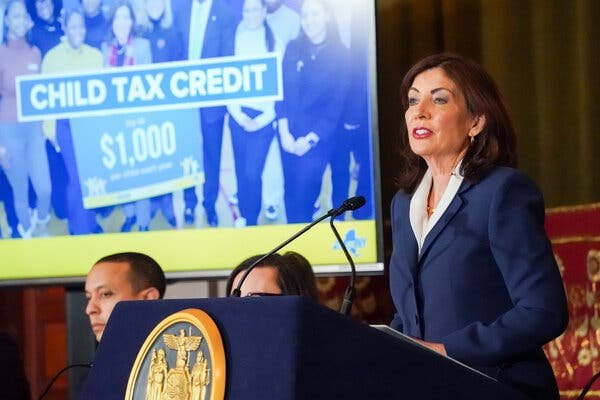
The child care package also includes an enhanced Child and Dependent Care Tax Credit, expected to help about 230,000 families with an average benefit of $576, and further support for the Child Care Assistance Program, where child care costs would be capped at $15 per week for most families.
The budget agreement also targets rising household expenses through auto insurance and energy reforms. According to the Governor’s office, New Yorkers pay just over $4,000 annually on average for car insurance, nearly $1,500 above the national average. The budget proposes changes aimed at reducing fraud, limiting excessive payouts connected to criminal conduct, restricting rate-setting based on personal factors such as occupation or ZIP code, and strengthening oversight of insurers.
On energy affordability, the agreement includes a one-time $1 billion energy rebate and a Ratepayer Protection Plan that would require utilities to justify costs more strictly, prevent customers from paying for expenses such as lobbying and unnecessary executive travel, and tie executive pay more directly to affordability for customers.
For immigrant New Yorkers, the budget includes what the Governor’s office described as comprehensive protections against aggressive federal immigration enforcement. The plan would prohibit local law enforcement from being deputized by ICE for civil immigration enforcement, restrict ICE access to sensitive locations such as schools, libraries, health care facilities, polling places and homes without a judicial warrant, and codify students’ right to public education regardless of immigration status.
The agreement also introduces online safety measures for children, including default privacy settings, restrictions on who can contact or tag children online, parental approval for children under 13 making new gaming-platform connections, limits on children’s gaming expenditures, and disabling integrated AI chatbots for children.
Public safety provisions include a first-in-the-nation law requiring regulations to ensure that 3D printers sold in New York include technology that blocks them from printing firearms. The agreement also strengthens penalties related to ghost guns, invests $352 million in gun violence prevention, provides $77 million for NYPD subway policing, expands subway mental health response teams, and adds $35 million for Securing Communities Against Hate Crimes grants.
The budget also maintains universal school meals with $395 million for free breakfast and lunch for every K-12 student in New York, eliminates state income tax on tipped wages up to $25,000 per year, adds $250 million in capital funding for affordable housing, and provides $30 million in tariff relief for New York farmers.
Housing and infrastructure are also central to the agreement. The budget includes reforms to speed up certain housing and infrastructure projects by modernizing the State Environmental Quality Review Act, especially for projects expected not to cause significant environmental harm. It also includes a proposed pied-à-terre tax surcharge on high-value second homes and investor-owned apartments worth $5 million and above in New York City, projected to generate at least $500 million annually.
For communities across New York, the agreement’s impact will depend on how these commitments are implemented after legislative passage. For families struggling with child care costs, renters facing housing pressure, immigrant communities concerned about enforcement, commuters worried about safety, and households burdened by utility bills, the budget presents a wide-ranging promise: to make state government more responsive to daily pressures while investing in long-term stability.
The legislative houses are expected to pass bills fully enacting the priorities in the coming days. The Governor’s office said the FY 2027 budget agreement does not raise income or statewide business taxes.
About The Author