NYS Assembly recognizes Sheikh Musa Drammeh for public health, media, civic service
The New York State Assembly has honored Sheikh Musa Drammeh for his leadership in public health, education, community media, civic engagement, peacebuilding and service to Bronx communities.
By Mutiu Olawuyi
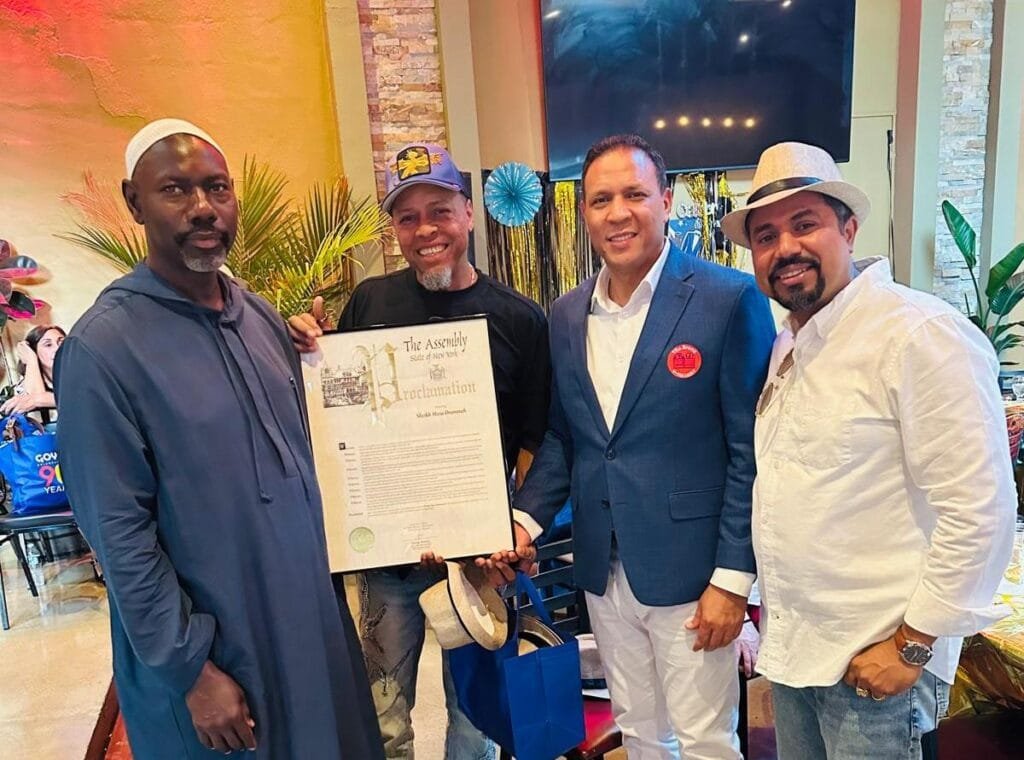
Sheikh Musa Drammeh has been recognized by the New York State Assembly for his outstanding leadership, community service and long-standing contributions to public health, education, civic engagement, entrepreneurship and media development.
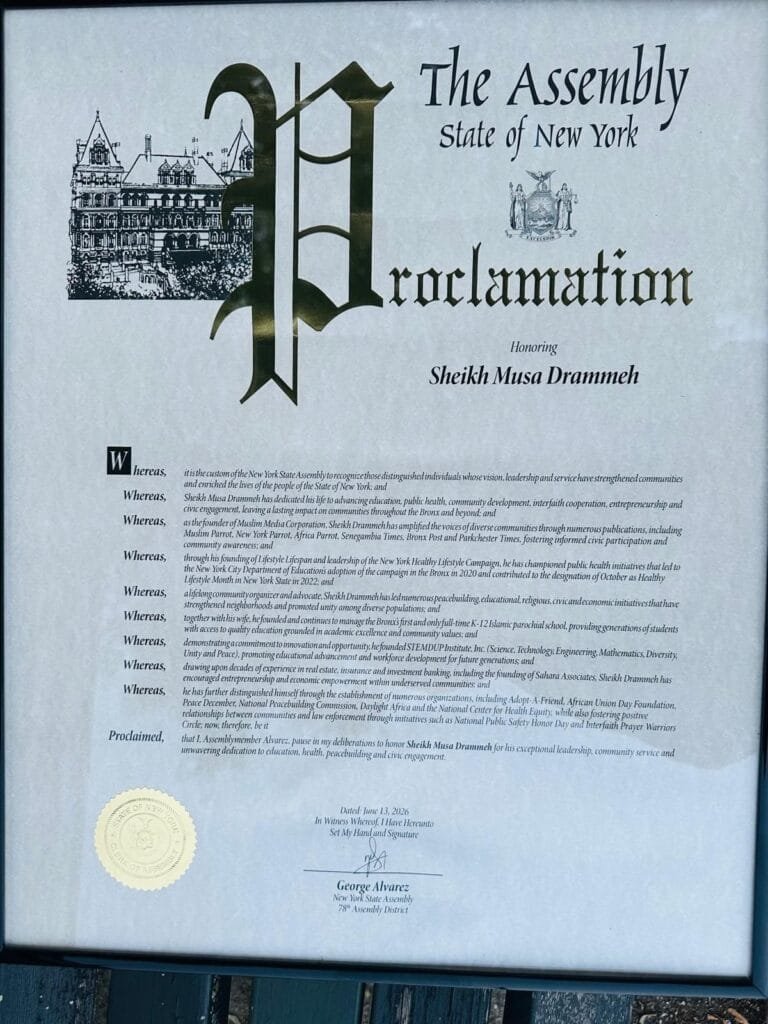
The recognition, presented in the form of a formal proclamation, celebrates Drammeh’s work as a community builder whose efforts have touched African, Muslim, immigrant and wider New York communities.
The proclamation was issued through the office of Assemblyman Hon. George Alvarez, acknowledging Drammeh’s dedication to service, institution-building and community advancement in the Bronx and beyond.
According to the proclamation, Drammeh has devoted his life to education, public health, entrepreneurship, interfaith engagement and civic responsibility, leaving a lasting impact through his leadership and service.
As founder of Muslim Media Corporation, Drammeh has helped expand community-centered journalism through several media platforms, including Muslim Parrot, New York Parrot, Africa Parrot, Senegambia Times, Bronx Post, Parkchester Times and other outlets. These platforms have provided space for immigrant voices, African diaspora stories, civic education, public service information and community empowerment.
The proclamation also highlights his broader contributions to public health, family life, youth development, peacebuilding and civic participation.
Through several initiatives, Drammeh has worked to strengthen communities, promote responsibility, encourage interfaith harmony and support underserved families.
Reacting to the honor, Drammeh said he was deeply grateful for the recognition, describing it as one of the most personally meaningful acknowledgments he has received.
“Every honor and acknowledgment, big and small, must be appreciated, and I am very appreciative of all of the ones given to me,” Drammeh said. “I have received a number of proclamations, citations and awards, but this, for reasons I don’t know, carries a profound significance to me.”
He said the proclamation would occupy a special place in his office.
“I am deeply grateful for it and shall forever hang it where visitors to my office can see it,” he said.
Drammeh also expressed appreciation to Assemblyman Alvarez and his staff for what he described as a remarkable proclamation.
“I am truly grateful to Assemblyman Hon. George Alvarez and his amazing staff for this remarkable proclamation,” he said. “I humbly accept it on behalf of my fellow Bronxites whom I love and admire.”
For Drammeh, the Bronx remains more than a place of residence or service. It is a community of strength, resilience and possibility.
“Bronx, to me, is the best place to manifest good leadership and resilience,” he said. “To God be the Glory!”
For the African and Senegambian communities in New York, the honor is significant. It reflects not only the personal journey of Sheikh Musa Drammeh, but also the growing visibility of African immigrant leadership in American civic life.
Drammeh’s work represents a bridge between Africa and the diaspora, between faith and public service, and between community identity and civic responsibility. His recognition by the New York State Assembly is therefore a reminder that immigrant contributions are part of the strength of New York and the wider United States.
At a time when many communities face division, misinformation, health disparities, youth challenges and social fragmentation, recognitions of this nature carry a broader message: public service matters, institution-building matters, and communities are strengthened when leaders commit themselves to the common good.
For Sheikh Musa Drammeh, the honor adds to a long record of service rooted in faith, family, media, health, education and community development.
For the communities he serves, it is also a call to continue building institutions that inform, heal, educate and unite.
About The Author