Guinea’s flag rises again in New York as diaspora leaders turn independence into call for civic ownership
By Mutiu Olawuyi
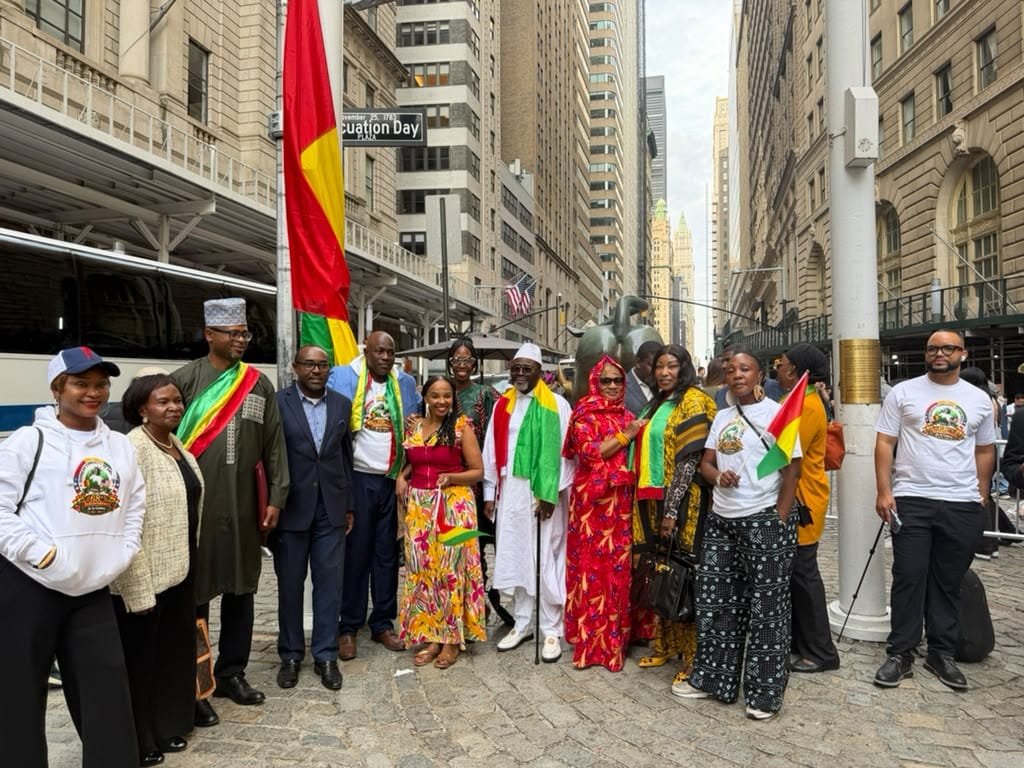
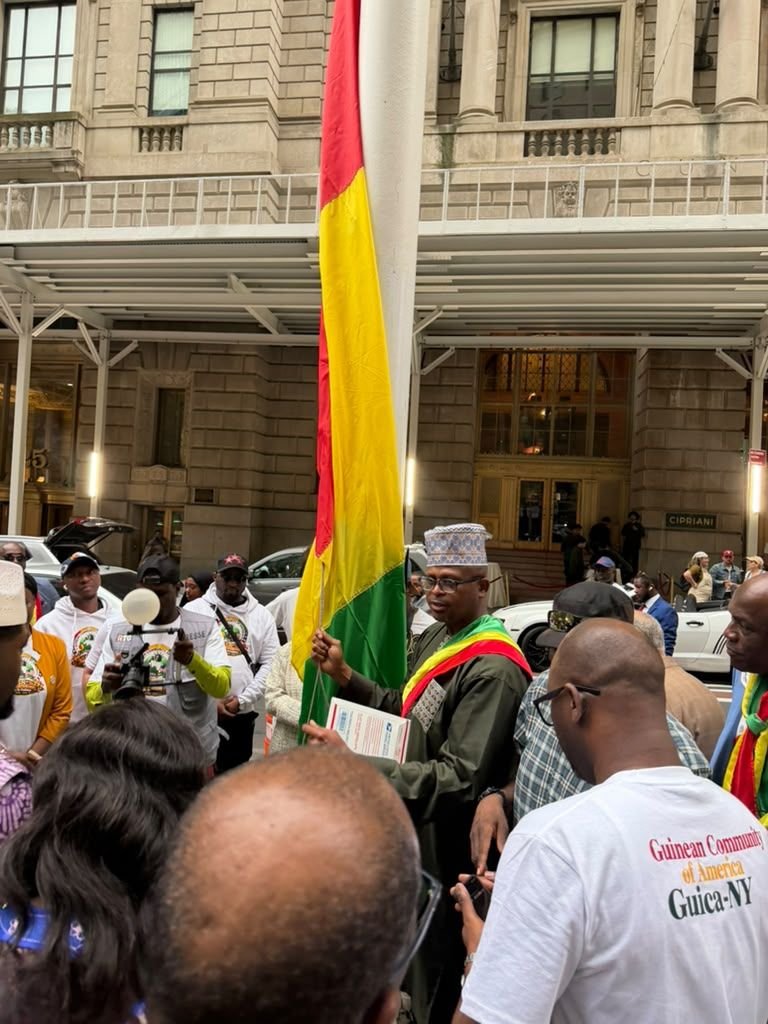
NEW YORK — The red, yellow and green flag of Guinea rose over Bowling Green in Lower Manhattan on Friday, Oct. 2, as Guinean New Yorkers and African diaspora leaders marked the country’s 68th Independence Day. The ceremony tied national sovereignty to civic responsibility, cultural recognition and the growing political voice of African immigrants.
The fourth annual Guinea Flag-Raising in New York City drew community representatives, diaspora leaders, diplomatic officials and civic figures to the historic Financial District park. Guinea won independence from France on Oct. 2, 1958, and the city’s ceremony has grown since its first edition in October 2023.
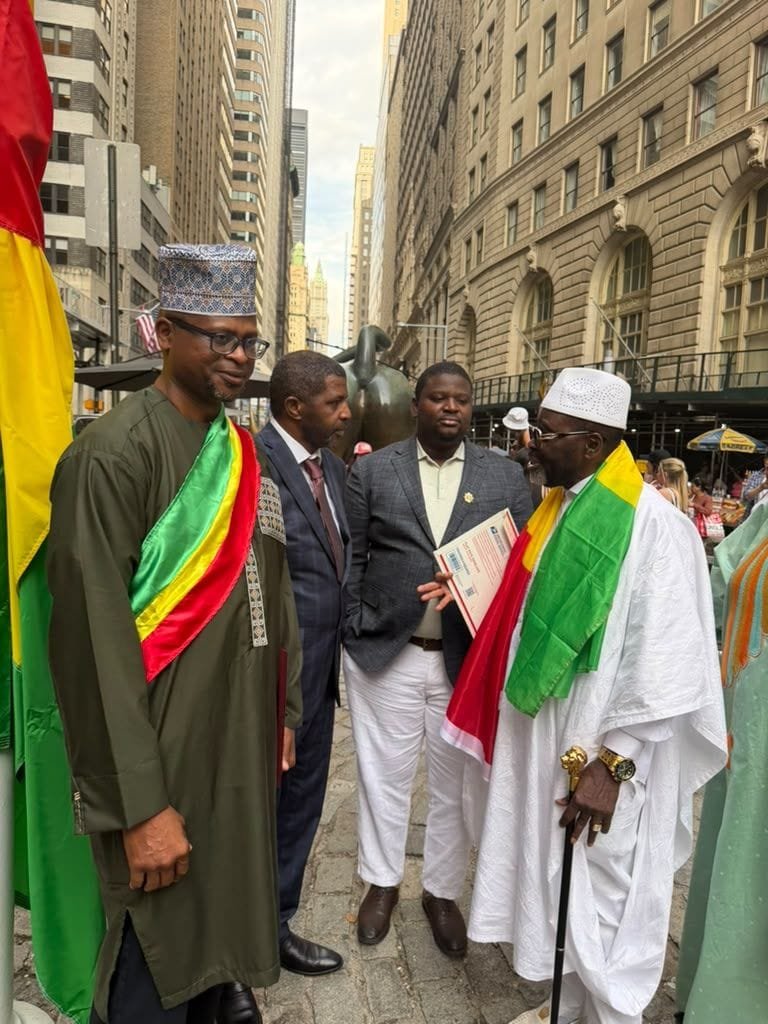
For Mory Kouyate, chair of the African Immigrants’ Commission of New York and Connecticut, the day meant more than raising a flag.
“What does it mean to be independent? It means taking your destiny in hand to move forward and make decisions and be responsible for your decisions and making things happen,” Kouyate told attendees.
His message reframed independence as an ongoing obligation. Citizens and diaspora communities, he suggested, must take part in shaping their collective future.
From a borough proclamation to citywide recognition
Kouyate also pointed to what he described as a milestone for African communities in New York: the City Council’s September action designating September as African Heritage Month. He traced the effort to an early proclamation by the Bronx borough president.
The campaign has a documented history. The African Journal reported in 2018 that the Bronx African Advisory Council, which Kouyate then chaired, won the backing of then-Borough President Rubén Díaz Jr. for a first African Heritage Month that September. City Hall has since stepped up its own recognition. Mayor Zohran Mamdani hosted the city’s first African Heritage Reception at Gracie Mansion on Sept. 9.
“And we continue to advocate for African Heritage Month,” Kouyate said, outlining an ambition to take the campaign beyond New York.
“The key is to make it [a vote] in Washington so that Washington can vote African Heritage Month in September.”
A vehicle already exists in Congress. Reps. Ritchie Torres and Yvette Clarke introduced a resolution in September 2025 to establish September as National African Immigrant Heritage Month. It was endorsed by the Bronx African Advisory Council. Such a measure would move the idea from municipal recognition toward a national conversation about the contributions of African immigrants and people of African descent.
Independence and diaspora responsibility
The ceremony also gave Kouyate a platform to reflect on the relationship between Guinea and its citizens abroad. He recognized diplomatic and community figures, including Ambassador Davo and other leaders who have strengthened ties between Guinea and its diaspora.
He also highlighted Aly Fadiga, whom he described as the first person elected to Guinea’s National Assembly to represent the diaspora, a development he called historic. Fadiga won the Americas seat in this year’s legislative elections and has since joined the Assembly’s foreign affairs committee.
On arriving in Conakry in June, Fadiga said the diaspora had long been sidelined and thanked President Mamady Doumbouya for backing its place in the Assembly. Ahead of the vote, Guinea’s foreign minister had told embassies to propose diaspora candidates through a process the ministry called transparent, inclusive and consensual, in consultation with councils of Guineans abroad.
That emphasis on representation reflects a wider reality for African immigrant communities in New York. Cultural celebrations increasingly serve as civic spaces where heritage, political participation and community development meet.
A city that has made room for the flag
New York has used flag-raisings to acknowledge African communities. At the 2023 ceremony, then-Mayor Eric Adams said such events affirm that immigrants bring their culture, food, business acumen, family and faith into the life of the city. At the 2024 ceremony, he said that while communities celebrate national independence, “We need each other.”
From celebration to the next generation
For Kouyate, the flag-raising’s value lies in what the community does after the ceremony. His definition of independence, “taking responsibility, making decisions and making things happen,” puts agency at the center of the diaspora’s future.
That gives cultural celebration a practical civic purpose. A flag can preserve memory, but organized communities can turn that memory into institutions, representation, educational opportunities, economic partnerships and stronger ties between New York and African countries.
The fourth ceremony was therefore both remembrance and a challenge. Guinea’s independence was celebrated in New York, while its diaspora was asked what greater civic ownership could mean in the years ahead. For the Guinean community, the next chapter may reach beyond Bowling Green: toward stronger representation in New York, wider recognition of African heritage nationally and a more deliberate role in Guinea’s own development.
About The Author